
Money on the Horizon! (Part 1)
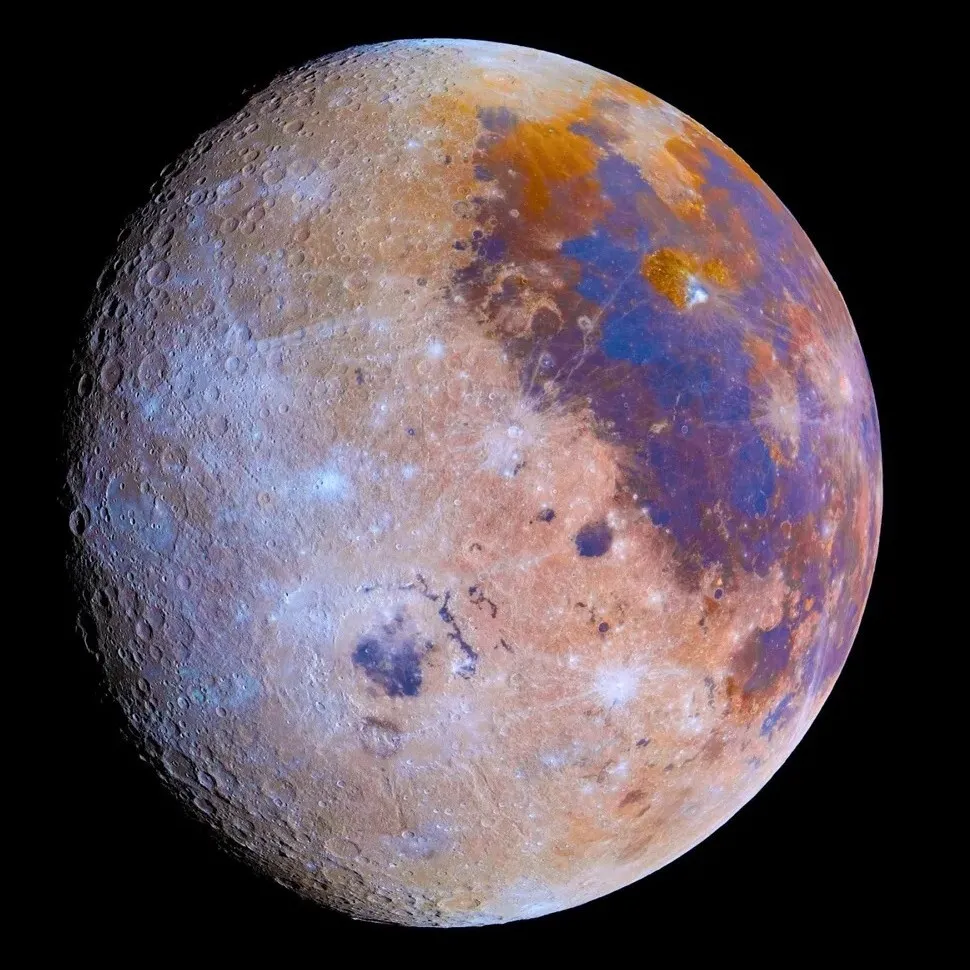
The Far Side of the Moon—Even the Titanium and Iron Patterns Are Clear
The collaboration between Andrew McCarthy and NASA’s Artemis II is truly exhilarating news for space enthusiasts. In April 2026, the ultra-high-definition data sent back following the successful lunar orbit mission of Artemis II signifies that humanity has moved one step closer to the geological truth of the far side of the Moon.
Amidst the crisis of resource depletion on Earth, “Lunar Mining” is no longer just science fiction but is being discussed as a realistic economic alternative. Here is a summary of the feasibility of underground resource mining and an analysis of its scientific impact.
🌑 Lunar Resource Mining: Scientific Analysis and Outlook
1. Key Lunar Resources and Earth’s Resource Crisis
Earth currently faces supply chain instability and the depletion of minerals essential for the energy transition, such as Rare Earth Elements (REE), lithium, and cobalt. As of 2026, the prices of these resources have become extremely volatile due to geopolitical crises.
- Helium-3 (He-3): Estimated to have deposits of approximately 1 million tons in the lunar regolith (soil). Just 100 tons could provide enough energy to power the entire human race for a year; it is considered the “dream fuel” for nuclear fusion.
- Rare Earths and Precious Metals: The Moon’s “KREEP” terrane is rich in rare earths, titanium, aluminum, and iron, with concentrations comparable to top-tier mines on Earth.
- Water Resources (Ice Water): Existing as ice in the Permanently Shadowed Regions (PSR) of the lunar south pole, this can be converted not only into drinking water but also into hydrogen rocket fuel, drastically reducing space logistics costs.
2. Scientific Feasibility (ISRU Technology)
Current focus is shifting from “importing” resources back to Earth toward In-Situ Resource Utilization (ISRU)—sourcing materials directly on-site.
- Regolith Heating: Technology to extract oxygen and Helium-3 by heating the soil to over 600°C has reached the prototype stage.
- Robotic Automation: Autonomous mining robots capable of operating in low gravity (1/6 of Earth’s) are being developed, paving the way for large-scale mining without human intervention.
⚠️ Impact of Resource Mining on the Natural Environment
While lunar mining presents an opportunity for humanity, it could also cause irreversible environmental changes to both the Earth and the Moon.
1. Impact on the Lunar Environment
- Permanent Topographical Change: Because the Moon lacks an atmosphere and water, no erosion occurs. This means any excavated craters or vehicle tracks will remain for millions of years, damaging the Moon’s unique geological value.
- Formation of Lunar Dust Clouds: Fine lunar dust generated during mining can stay suspended due to static electricity, potentially polluting the thin exosphere. This could interfere with astronomical observations and alter the Moon’s albedo (reflectivity).
- Destruction of Scientific Sanctuaries: The far side of the Moon is the “optimal site for space observation” due to the absence of radio interference from Earth. Indiscriminate mining could create fatal noise for sensitive radio telescope operations.
2. Indirect Impact on Earth
- Changes in Moonlight: Theoretically, if large-scale mining significantly alters the lunar surface’s reflectivity, the amount of light reaching Earth at night could change. Hypotheses suggest this might subtly affect the biological rhythms of wildlife.
- Increase in Space Debris: Frequent shuttle flights for resource transportation could increase satellite density in Low Earth Orbit (LEO), raising the risk of the Kessler Syndrome (cascading space debris collisions).
💡 Conclusion and Implications
According to scientific data, lunar mining is technically expected to become commercially viable after the mid-2030s. However, the Moon is a partner closely linked to Earth’s ecosystem through tides and other natural phenomena.
Core Recommendation: “The Moon is the common heritage of mankind.” Before an indiscriminate scramble for resources begins, it is urgent to establish international space resource management norms to supplement the 1967 Outer Space Treaty.
A delicate balance between technological progress and environmental protection is required so that the beautiful integrity of the far side of the Moon, captured by Andrew McCarthy, is not obscured by the dust of mining equipment.