
Deep Dive into Safe Passage and Global Marine Reinsurance Utilization Rates
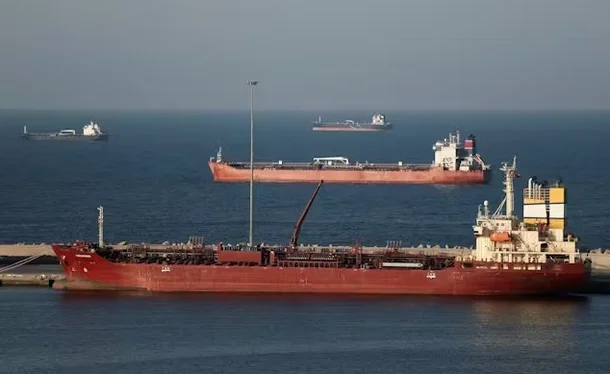
The explosion on the port side of a tanker off the coast of Muscat, Oman, transcends a mere localized provocation. It is pushing the geopolitical stalemate in the Strait of Hormuz—the vital chokepoint of the global crude oil supply chain—into its absolute worst-case scenario.
From a macro-finance and maritime logistics perspective, this comprehensive analysis explores how this additional strike in the outer waters of Oman severely diminishes the chances of securing Safe Passage Approval for tankers currently detained or isolated within and around the Strait of Hormuz. Furthermore, it evaluates the sudden shockwaves this event triggers across the Reinsurance Utilization Rates for war risk coverage among international marine insurers, including Lloyd’s of London.
1. Complete Derailment of ‘Safe Passage’ Negotiations and the Prolonged Stalemate Scenario
The explosion off the coast of Oman (60 nautical miles east of Muscat) has effectively paralyzed the international diplomatic momentum regarding Safe Passage negotiations for dozens of Very Large Crude Carriers (VLCCs) trapped inside the Strait of Hormuz.
- Expansion of the Geographical Risk Radius: It has now been proven that the target zone has widened beyond the internal boundaries of the Strait of Hormuz to include the outer Gulf of Oman and the entire Sea of Oman. These waters are now vulnerable to asymmetric warfare, such as drone strikes, waterborne improvised explosive devices (WBIEDs), or floating naval mines. Consequently, ongoing negotiations for the safe extraction of vessels between the U.S., Iran, and neighboring Arab states are abruptly shifting toward a complete collapse.
- Total Shattering of Safe Passage Credibility: A critical military limitation has come to light: even if a specific vessel is granted Navigational Safe Conduct, authorities cannot control or prevent unattributed surface strikes near a ship’s waterline. As a result, the operational transit rate for vessels trapped within the strait is highly likely to hover near 0%, forcing a state of indefinite, total isolation.
2. Diagnosing War Risk Reinsurance Utilization Rates Among Global Marine Insurers
This latest incident has triggered an immediate “Panic Surge” across global marine insurance and reinsurance markets, particularly impacting the Joint War Committee (JWC) in London.
[Tanker Strike Off Oman Outer Waters] ──> [JWC Expands Listed High-Risk Areas] ──> [Reinsurance Collapse & Underwriting Refusal] │ [Maritime Logistics Freeze]
📊 Marine Insurance Market Indicators & Reinsurance Utilization Outlook
| Insurance & Risk Indicators | Pre-Incident Baseline | Post-Incident Outlook & Volatility | Macro-Economic & Capital Market Impact |
|---|---|---|---|
| War Risk Premium | Formed at approximately 0.7% to 1.0% of the hull value (already up dozens of times over peacetime baselines). | Exponential Surge: Following the outer Oman strike, premiums are being aggressively recalculated into an ultra-high-risk tier exceeding 2.0% to 3.0% of the total hull value. | This means that if a VLCC valued at $100 million attempts to transit the area, the shipowner must pay over $3 million (approx. 4 billion KRW) in cash upfront for a single voyage. |
| Reinsurance Utilization Rate | Maintained under a state of deferred renewals and highly conditional subscription-based underwriting. | Severe Contraction (Underwriting Freeze): International reinsurers are beginning to refuse or freeze renewals for war risk reinsurance binders covering vessels transiting the Strait of Hormuz and the Sea of Oman. | As policy renewals and reinsurance utilization plunge below 10% to 20%, shipowners are forced to abandon transits entirely, unable to enter the strait in a state of technical uninsurance. |
| P&I Club Exclusion Clauses (Protection & Indemnity) | Ongoing discussions regarding highly restricted liability caps for pollution and crew casualties. | Environmental Pollution Exclusions Triggered: Because this specific strike confirmed a partial fuel leak, P&I Clubs are highly likely to invoke sweeping exclusion clauses regarding environmental remediation liabilities caused by geopolitical hostilities. | This leaves shipowners with an uninsurable operational liability, serving as the ultimate trigger to halt all entry into the strait. |
3. The Macroeconomic Ripple Effect of a Paralyzed Maritime Logistics Supply Chain
The prolonged isolation of tankers within the Strait of Hormuz, combined with the structural failure of the marine insurance market, delivers a direct blow to the global real economy.
- Surge in Cape of Good Hope Diversions and Spiking Ton-Mile Metrics: Due to the physical closure of Hormuz and widespread insurance denials, crude shipments originating from the Middle East have no choice but to bypass the region via the African Cape of Good Hope. This diversion increases average transit times by more than 14 days, forcing a secondary explosion in global tanker spot charter rates.
- Hyper-Inflation of Spot Crude Premiums for Refiners: As premium global refiners (such as those in South Korea) scramble to secure alternative non-Hormuz crude slates, global bidding wars for American and African light sweet grades will intensify. This structural panic could push the price spread between Dubai and Brent crude to extreme, unprecedented margins.
💡 Strategic Market Insight Summary for Global Investors
The tanker attack off Muscat, Oman, has shattered any short-term hope for a diplomatic breakthrough inside the Strait of Hormuz. Marine reinsurance utilization rates for war risk cover are collapsing to historic lows, pushing merchant shipping into an environment of “geopolitical uninsurance.”
From an institutional asset management perspective, this crisis dictates a fundamental re-rating of global shipping, logistics, and energy infrastructure valuations. Because a swift resolution regarding safe passage is now mathematically improbable, portfolios must price in a severe crude supply-chain bottleneck lasting at least 3 to 6 months.
Consequently, this macro volatility will accelerate the global “Money Move” (capital reallocation) toward large-cap energy transition leaders (such as Hyundai Motor Group, SK Innovation, Doosan Enerbility, and HD Korea Shipbuilding & Offshore Engineering). These enterprises possess the structural resilience to protect near-term plant margins while operating advanced, state-subsidized alternative hydrogen and clean infrastructure development roadmaps.