
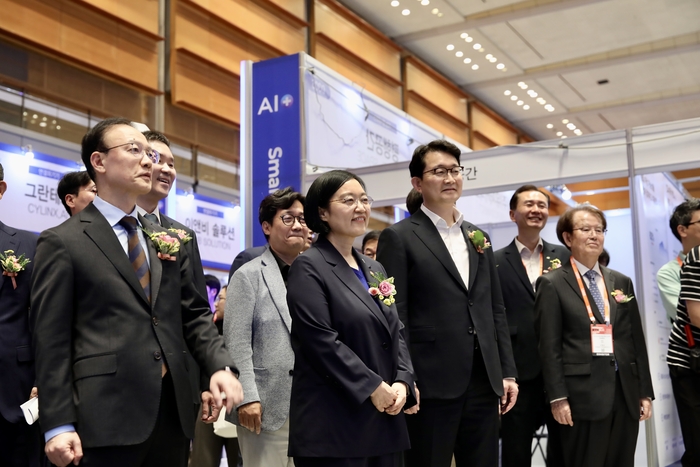
The year 2026 marks a monumental milestone as the ‘Global K-Foods Automation Concept’ transcends a mere vision to enter full-scale commercialization on the global stage. Driven by a series of major demonstrations—including the ‘Next K-Food & Smart Solution’ pavilion at ‘Food Week Korea 2026’ in COEX, Seoul, and the ‘K-Food Expo 2026′ at EXCO, Daegu—global investors’ interest in pioneering overseas markets through Automation Robotics is higher than ever before.
This report provides an in-depth analysis of K-food automation robotics development status, the commercialization timeline (availability for purchase) for global and general business investors, and the roadmap for building a global supply chain.
1. K-Food Automation Robotics Development Status
Currently, K-food automation technology has evolved beyond simple manufacturing and packaging into an integrated form that combines Artificial Intelligence (AI), Machine Vision, and Soft Robotics. The core focus is developing customized technologies to overcome the unique characteristics of K-food, such as non-standardized ingredients, precise sauce application, and complex cooking processes.
- Cooking Automation Centered on Articulated Robots: Multi-axis articulated robot arms are actively being deployed in K-food cooking processes that require precise, repetitive movements, such as frying chicken, stirring tteokbokki, and rolling gimbap. As of 2026, this sector stands as a core pillar driving the growth of the global kitchen robotics market.
- AI Machine Vision-Based Quality Inspection: AI deep learning vision systems have been commercialized to recognize and portion irregularly shaped Korean side dishes or meal kit (RTE: Ready-to-Eat) components in real-time. These systems detect foreign objects or packaging defects at a rate of thousands of units per minute.
- Advancements in Soft Gripper Technology: Pressure-controlled adaptive robot technologies have gone mainstream, enabling the damage-free handling (gripping) of delicate and easily deformed K-food ingredients, such as dumpling skins and tofu for stews.
2. Commercialization Timeline for General Business Investors and Restaurateurs
For general franchise operators or small-to-medium investors aiming to enter global markets, the timing for purchasing and deploying these systems at a ‘reasonable cost’ varies depending on whether they adopt large-scale fixed equipment or collaborative robots (cobots).
| Category | Target Technologies & Equipment | Timeline for General Purchase & Mass Adoption | Remarks |
| 1st Gen HORECA | Auto-frying bots, noodle-cooking bots, barista robots | Immediately available (Fully commercialized as of 2026) | ROI (Return on Investment) validation phase completed, primarily centered around major franchises. |
| AI Collaborative Cooking Bots | Integrated kitchen solutions, 24-hour unmanned K-food kiosk packs | Late 2026 ~ Early 2027 | Global rental and subscription (RaaS: Robotics-as-a-Service) programs launching on the occasion of these exhibitions. |
| Smart Logistics & Factories | Automated K-meal kit packaging, small Autonomous Mobile Robots (AMR) | 2027 ~ 2028 | Cost-effective modular products tailored for small business owners are scheduled for release. |
Investor Tip (ROI Perspective): As of 2026, the kitchen robotics and automation market is recording high annual growth rates of approximately 9.9% to 15.7%. Because it not only reduces labor costs but also guarantees ‘taste consistency across overseas locations,’ investment via overseas Master Franchises is currently the most active segment.
3. Global K-Food Supply Chain Roadmap
For K-food to expand worldwide, the export of robotic equipment must be linked with a smart supply chain that encompasses everything from ingredient sourcing to processing and last-mile local logistics.
1.Smart Processing & Digital Twin Adoption (2026):Manufacturing Optimization.
Deploy Digital Twin technology in manufacturing plants producing core raw materials and K-sauces for export. This enables production simulations in a virtual factory to eliminate bottlenecks and reduce manufacturing costs.
2.Cold Chain & Blockchain Traceability Integration (Late 2026):Global Distribution & Regulatory Compliance.
In compliance with global hygiene standards, such as Section 204 of the US FDA FSMA (Food Safety Modernization Act), the entire distribution process from sauces to finished products is recorded on a blockchain. This system integrates with IoT containers equipped with temperature and humidity sensors to guarantee ultimate freshness.
3.Establishing Local HORECA Automation Hubs (2027):Local Footprint Expansion.
Build ‘K-Foods Automation Hubs’ (local central kitchens and robot AS/maintenance centers) in major hub cities across the US, Europe, and Southeast Asia. These hubs will handle the primary processing of local raw materials, completing a standardized supply chain that can feed ingredients directly into in-store cooking robots.