
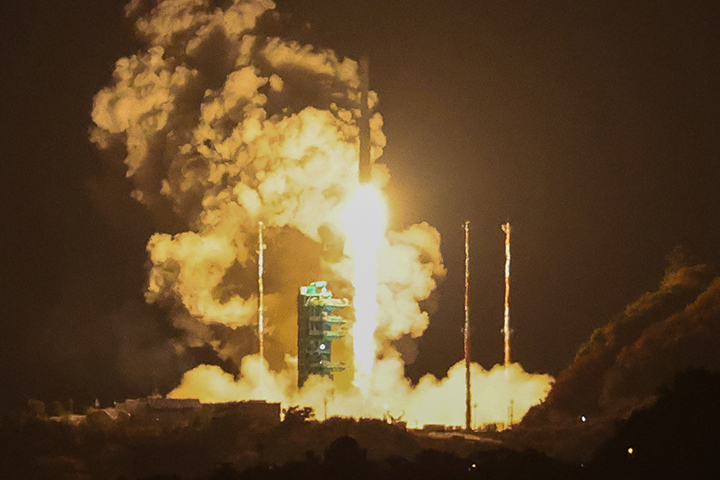
The plan to establish the “Southern Coast Aerospace Industrial Belt,” announced as part of President Lee Jae-myung’s “Three Mega Projects,” is far from a mere populist policy aimed at regional development. Rather, it represents the completion of a highly sophisticated, three-dimensional space economy belt that connects three major pillars into a triangular structure:
- Korea Aerospace Industries (KAI)’s R&D and space hub infrastructure in Jeju.
- A private space launch vehicle base capitalizing on Jeju Island’s unique geographical advantages.
- The traditional machinery, shipbuilding, and aerospace manufacturing infrastructure of the Yeongnam region (Sacheon, Changwon, Ulsan, etc.).
This in-depth analysis evaluates the government’s aerospace roadmap—which aims to propel South Korea to the world’s No. 1 manufacturing powerhouse by fusing geographical advantages (Jeju), manufacturing engineering capabilities (Yeongnam), and airport/seaport logistics networks (Southern Coast)—from an investor’s perspective.
1. A 3D Fusion of Geography, Manufacturing, and Logistics: Why Yeongnam and Jeju?
The government’s envisioned aerospace belt is a three-axis, multi-dimensional system where hardware production, research and development (R&D), final launch, and control operate organically.
[Yeongnam Region (Sacheon/Changwon)] ➔ Infrastructure Manufacturing & Mechanical Engineering (Launchers, Satellites, UAM Assembly) ▲ │ (Connected via Southern Coast Airport/Seaport Ultra-High-Speed Logistics Network) ▼[Jeju Island (Space Center)] ➔ Low-Latitude Geographical Launch Advantage + Global Space Data Control Infrastructure
- Yeongnam Region – World-Class Hardware Manufacturing Hub: Centered around Sacheon (KAI Headquarters), Changwon (engines and precision machinery), and Ulsan (materials and mobility), this region already possesses the infrastructure for immediate mass production of aerospace components.
- Jeju Island – The Optimal Flight Path Utilizing Earth’s Rotation: The closer a launch site is to the equator (low latitude), the more it can leverage Earth’s rotational speed during launch, drastically saving fuel. This is precisely why Jeju, along with the Naro Space Center in Goheung, was chosen as the mecca for private small-satellite launch vehicles and KAI’s new space R&D hub.
- Southern Coast Airport & Seaport Logistics: An “one-stop security logistics network” will be fully operational, allowing ultra-precision satellites and large launch vehicle components manufactured in Yeongnam to be instantly transported to the Jeju Space Center and global launch destinations via Sacheon Airport or southern coast seaports.

2. Core Aerospace Value Stocks to Monopolize from an Investor’s Perspective
The Southern Coast-Jeju Belt roadmap, backed by a massive government budget, serves as the most definitive catalyst for a multiple re-rating of the domestic space economy.
① The Apex and Anchor Corporation of the Belt: Korea Aerospace Industries (KAI)
- Investment Mechanism: The ultimate beneficiary of this policy. In addition to its turnkey aircraft manufacturing capabilities at the Sacheon headquarters, KAI is vertically integrating space research infrastructure in Jeju, Advanced Air Vehicles (AAV), and satellite service businesses.
- Long-Term Value: KAI is reinvesting the massive cash reserves generated from its terrestrial defense exports (FA-50) into the New Space industry. As the de facto commander of the government-backed “Southern Coast Belt,” it stands as the top priority target for long-term portfolios of foreign institutional investors.
② The Monopoly Leader in Space Engines and Launch Vehicles: Hanwha Aerospace
- Investment Mechanism: As the master integrator for the Nuriho (KSLV-II) advancement project, Hanwha Aerospace is the industry bellwether, housing a massive space engine production base in the Yeongnam region (Changwon).
- Long-Term Value: The company virtually monopolizes the supply of propulsion systems for private and military satellite launch vehicles to be deployed from Jeju and the southern coast. Synchronized with the global valuation momentum of SpaceX, this stock will lift the ceiling for South Korea’s space economy theme.
③ Jeju-Based Innovator in Global Space Data Control: Contec
- Investment Mechanism: A hyper-gap New Space value stock that operates its own space ground station in Jeju, providing global satellite data control and reception services.
- Long-Term Value: As the government designates Jeju as the mecca for the New Space industry, Contec is a hidden champion poised to capture satellite data processing demands from global Big Tech and the Korea Aerospace Administration (KASA), proving the sharpest financial turnaround and growth.
💡 Investor Takeaways
| Market Noise (Prejudice) | Real Capital Market Signal | Value Investor Position |
| “The space industry is a story of the distant future with no real earnings.” | As seen in SpaceX’s valuation and Anthropic’s space data center contracts, this is a real business already generating trillions of won in locked-in revenue. | Exclude pure hype-driven theme stocks; focus heavily on KAI and Hanwha Aerospace, where actual earnings and order backlogs are visible. |
| “Regional manufacturing is in terminal decline.” | This marks the revival of Yeongnam’s precision machinery infrastructure, re-engineered into a high-value, cutting-edge aerospace industry. | Use temporary market corrections and supply-demand volatility as opportunities to Buy the Dip on core Southern Coast Belt stocks. |
📌 Final Macro Conclusion
The Southern Coast Aerospace Industrial Belt and the Jeju launch vehicle roadmap announced by the government represent a sophisticated, multi-dimensional economic strategy designed to expand Yeongnam’s overwhelming manufacturing moat into the final frontier.
Global asset managers are already preparing to front-run South Korea’s top-tier aerospace value stocks ahead of the full-scale execution of the aerospace special budget in the second half of the year. Instead of panic selling during short-term index fluctuations, investors should steadily accumulate shares in the nation’s industry leaders (KAI, Hanwha Aerospace) and unparalleled tech champions that will drive South Korea’s economic growth for the next 30 years, thereby maximizing long-term capital gains.