
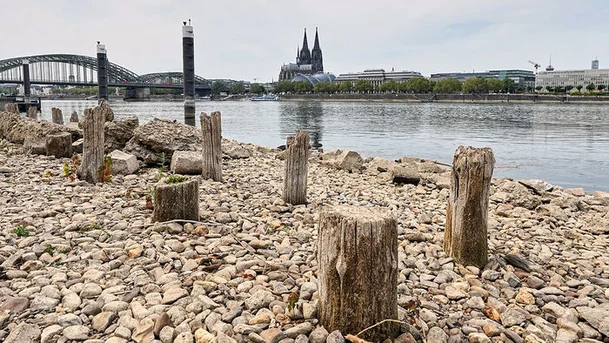
Heat Dome Crisis and the Global Economy: Climate Disaster Mitigation and Long-Term Asset Allocation Strategies
The massive heat dome phenomenon sweeping across Europe is evolving rapidly beyond a seasonal heatwave into a cascading climate risk—causing water depletion, energy security threats, supply chain paralysis, and surging grain prices. This climate crisis is not confined to Europe; it exerts continuous downward pressure on the global economy, including Asia.
This analysis provides an in-depth evaluation of global heat dome response measures and presents actionable, long-term asset allocation strategies designed to protect assets and enhance portfolio resilience amid market volatility.

(European drought threatens shutdowns – Hungarian nuclear power station fully shut down)
1. Fundamental Solutions and Technological Adaptations for the Global Heat Dome
A heat dome occurs when a high-pressure system stalls over a specific region, trapping hot air underneath like a lid. Because the weakening of the jet stream—driven by greenhouse gas emissions—is the primary cause, effective solutions require a simultaneous push for short-term technological adaptation and long-term structural reform.
[Vicious Cycle of the Heat Dome]Global Warming / Jet Stream Weakening ➔ Atmospheric Stagnation (Heat Dome) ➔ Dropping River Levels & Droughts ➔ Nuclear Cooling Water Shortages & Hydroelectric Shutdowns ➔ Energy Price Spikes & Logistics Paralysis
① Short- and Mid-Term Technological Adaptation Strategies
- Next-Generation Water Resource and Nuclear Cooling Systems:
- Transition to Closed-Loop and Dry Cooling Towers: Industrial and nuclear infrastructure must urgently pivot away from direct river water intake toward air-cooling and closed-loop recirculation systems that remain unaffected by falling river levels.
- Seawater Desalination and Integrated Water Management: To fundamentally reduce reliance on freshwater rivers, nations must build intelligent Smart Water Grids and wastewater reuse networks. Centralized, real-time water quality and supply monitoring systems are critical to efficiently allocate resources even during severe regional droughts.
- Urban Heat Island Mitigation (Cool Roofs & Green Infrastructure): Expanding highly reflective paint applications (Cool Roofs) and urban green spaces prevents extreme localized temperature surges and heat island effects. This acts as a protective shield for power grids by significantly curbing peak cooling electricity demand during summer.
② Long-Term Structural Mitigation Strategies
- Accelerating Decarbonization and Energy Transition: Reducing fossil fuel consumption to lower atmospheric greenhouse gas concentrations remains the only fundamental cure to restore normal jet stream patterns.
- Evaluating Geoengineering Regulations: International research and ethical/environmental guidelines surrounding Solar Radiation Management (SRM)—technologies aimed at increasing atmospheric reflectivity—are becoming increasingly concrete discussion topics.
2. Long-Term Perspectives for Global Investors Amid Climate Losses
Supply chain disruptions and climate-driven inflation (“Climate-flation”) are fundamentally reshaping traditional asset allocation frameworks. Long-term investors should adopt a two-track strategy focusing on risk management and capturing emerging opportunities in Climate Tech.
| Sector | Major Impact & High-Risk Areas | Long-Term Investment Opportunities & Promising Portfolios |
| Energy & Utilities | River-dependent power plants (Hydro, Nuclear), Fossil fuel facilities | Next-Gen Renewables: Solar, Wind, Geothermal Energy Storage Systems (ESS): Grid stabilization tech |
| Agriculture & Food | Open-field traditional farming, Water-intensive crops | AgTech: Smart farming, Hydroponics, Drought-resistant GMO seeds |
| Logistics & Infra | Inland river shipping, Aging power grids | Alternative Logistics: Eco-friendly rail, Intelligent Transport Systems (ITS) Smart Grids: High-Voltage Direct Current (HVDC), Power efficiency |
| Financials & Industry | Climate disaster-exposed physical assets, Insurers with surging loss ratios | Climate Analytics: AI-driven climate risk forecasting, ESG finance |
Core Long-Term Investment Themes
- Water Technology & Recycling: As droughts persist, the valuation of companies specializing in water treatment, membrane filtration, seawater desalination, and smart irrigation systems will continue to rise.
- Grid Modernization & ESS: To withstand surging cooling demand during heatwaves and offset conventional power plant shutdowns, building climate-resilient power grids and deploying energy storage systems (ESS) is essential.
- AgTech & Food Security: Crop yield declines caused by extreme weather trigger structural grain price increases. Developers of climate-resilient crop varieties and AI-driven indoor vertical farming enterprises are garnering significant market attention.
Record-Low Danube Threatens Historic Paks Plant Shutdown
This video covers the real-world operational crisis at Hungary’s Paks Nuclear Power Plant caused by record-low water levels on the Danube River, offering direct context for the climate disasters and nuclear cooling water shortages discussed in this analysis.