
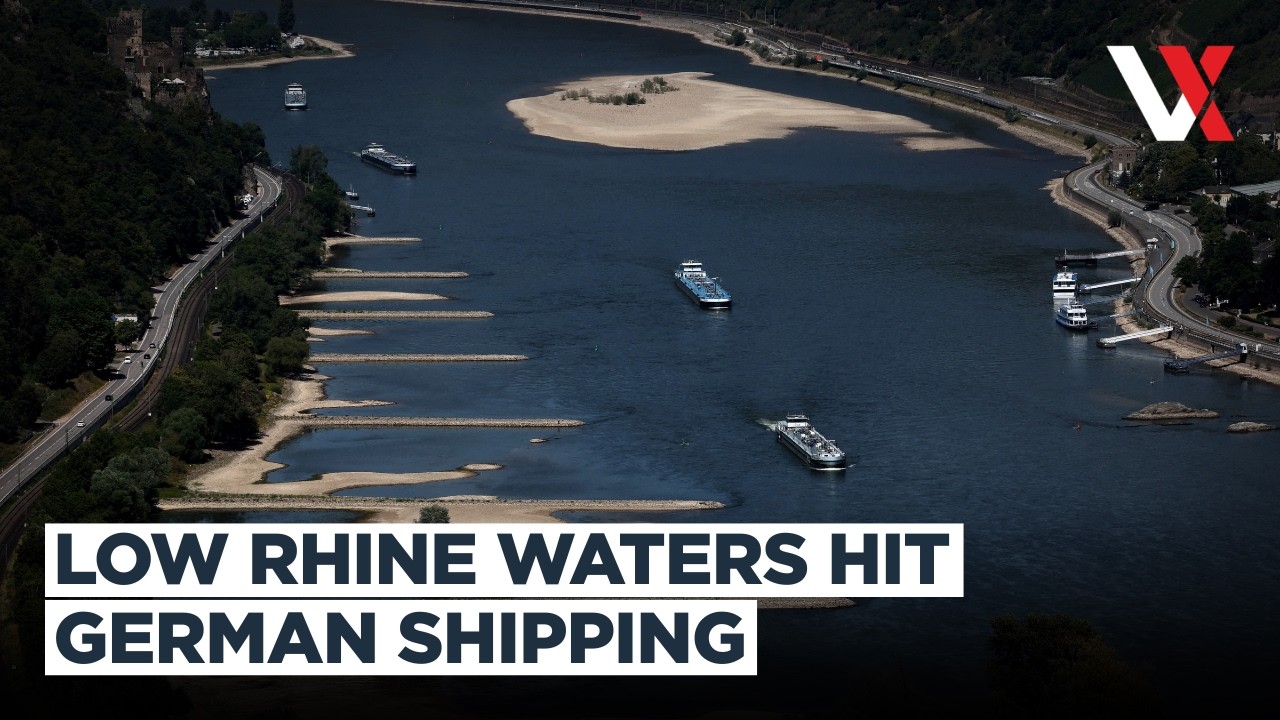
Analysis of Beneficiary Sectors and Investment Themes Amid Rhine River Inland Shipping Paralysis
The dropping water levels of the Rhine and Danube rivers—the vital arteries of European logistics—are causing a chain reaction of capacity restrictions, surging freight rates, and operational shutdowns. When inland water transport stalls, millions of tons of cargo (including crude oil, refined petroleum, coal, chemicals, and grains) are rapidly diverted to alternative transport methods and technologies.
This report provides a multi-dimensional analysis of three sectors positioned for structural gains during Rhine River shipping disruptions: 1) Alternative Freight & Logistics (Road & Rail), 2) Renewable Energy & ESS, and 3) Water Recycling & Purification Technology.
1. Alternative Logistics Sector: Freight & Logistics (Road & Rail)
A single Rhine River barge carries roughly the equivalent payload of 100 to 150 heavy trucks. In the event of a shipping shutdown, the immediate beneficiaries are overland and rail networks capable of rerouting high-volume bulk cargo.
Logistics Rerouting System
Rhine Barge Transport Interrupted ➔ Shift to Rail Freight ➔ Short-Haul Trucking Complement ➔ Surge in 3PL Integration Demand
① Rail Freight Operators
- Beneficiary Mechanism: Rail is the only viable alternative capable of transporting heavy bulk cargo—such as coal, refined oil, and grain—in large volumes. Companies holding major cross-border rail routes across Europe experience a rapid surge in freight volume and freight rates per ton.
- Key Investment Themes & Representative Stocks:
- Major European Rail & Logistics Companies: DB Cargo (Logistics subsidiary of Deutsche Bahn), VTG (Europe’s largest railcar leasing firm), PKP Cargo (Central European rail freight operator).
- Rail Infrastructure & Track Manufacturers: Vossloh, Alstom (Rail signaling and control systems).
② Road Freight & Third-Party Logistics (3PL)
- Beneficiary Mechanism: Demand for Heavy Goods Vehicles (HGVs) spikes to handle last-mile delivery to factories and water treatment plants not connected to rail lines. Comprehensive 3PL providers capable of instantly redesigning freight detour routes see improved profit margins.
- Key Investment Themes & Representative Stocks:
- Global/European 3PL Companies: DHL Group, Kuehne + Nagel, DSV, DB Schenker.
2. Alternative Energy and Energy Storage Systems (ESS)
The Rhine serves not only as an energy transportation route but also as a primary source of cooling water for nuclear and thermal power plants. When dropping water levels coincide with rising water temperatures, power plant utilization rates plummet, driving demand for renewable energy sources that operate independent of water resources.
Energy Substitution Mechanism
Cooling Water Shortage in Rivers ➔ Power Plant Shutdowns ➔ Peak Power Price Spikes ➔ Solar/Wind & ESS Deployment into the Grid
① Distributed Renewable Energy (Solar & Wind Power)
- Beneficiary Mechanism: Solar and dry-type wind power generation require virtually no water resources, making them essential replacements to cover grid power deficits during droughts and heatwaves.
- Key Investment Themes & Representative Stocks:
- European Renewable Energy Developers & Equipment Manufacturers: EDP Renováveis, Vestas (Wind), SMA Solar Technology (Inverters).
② Energy Storage Systems (ESS & Battery Storage)
- Beneficiary Mechanism: As baseline power from conventional thermal plants destabilizes, grid frequency instability worsens. Deployment of Battery Energy Storage Systems (BESS) accelerates to mitigate skyrocketing peak electricity prices and stabilize grid operations.
- Key Investment Themes & Representative Stocks:
- ESS Infrastructure & Battery Cell Manufacturers: Fluence Energy, Tesla (Megapack), LG Energy Solution, Samsung SDI.
3. Water Recycling and Water Treatment Sector (Water Tech)
As river levels decline, water velocity slows and temperatures rise, triggering algal blooms and heavy concentrations of chemical pollutants. To combat industrial water supply cutoffs, demand skyrockets for Zero Liquid Discharge (ZLD) systems and advanced water purification solutions.
Water Technology Mechanism
Declining River Water Volume ➔ Water Quality Deterioration & Algal Blooms ➔ Industrial Water Shortages ➔ Industrial Water Recycling (ZLD) & Smart Water Tech Adoption
① Industrial Water Recycling & Zero Liquid Discharge (ZLD) Systems
- Beneficiary Mechanism: Petrochemical, semiconductor, and pharmaceutical plants facing river intake restrictions are forced to implement ZLD and membrane filtration systems. These technologies treat and recycle 100% of used water internally without discharging wastewater externally.
- Key Investment Themes & Representative Stocks:
- Global Water Treatment & Filter Companies: Veolia, Suez, DuPont (Water Solutions), Xylem.
② Smart Water Management & Autonomous Purification Mobility
- Beneficiary Mechanism: On-site eco-friendly purification equipment for removing algal blooms, solar-powered autonomous water-cleaning robots, and AI-based water quality monitoring sensors emerge as promising high-growth sub-sectors.
- Key Investment Themes & Representative Stocks:
- Global Water ETFs: Invesco Water Resources ETF (PHO), First Trust Water ETF (FIW).
4. Summary of Beneficiary Themes for Investors
| Sector | Core Beneficiary Mechanism | Key Sub-Sectors & Asset Classes |
| Road & Rail Logistics | Rerouting bulk waterborne cargo overland & rising freight rates | • Rail Freight Operators (DB Cargo, VTG) • Integrated 3PL Logistics (Kuehne + Nagel, DSV) |
| Alternative Energy | Replacing thermal capacity lost due to river cooling water shortages | • Solar/Wind Developers (EDPR, Vestas) • Grid Energy Storage Systems (Fluence, Tesla) |
| Water Recycling | Mitigating river water intake limits via internal water reuse (ZLD) | • Water Treatment Membranes/Filters (Veolia, Xylem) • Global Water ETFs (PHO, FIW) |