
South Korea-China Diplomatic Breakthrough & US-North Korea Backchannel Talks: Geopolitical Shift & Investment Strategy
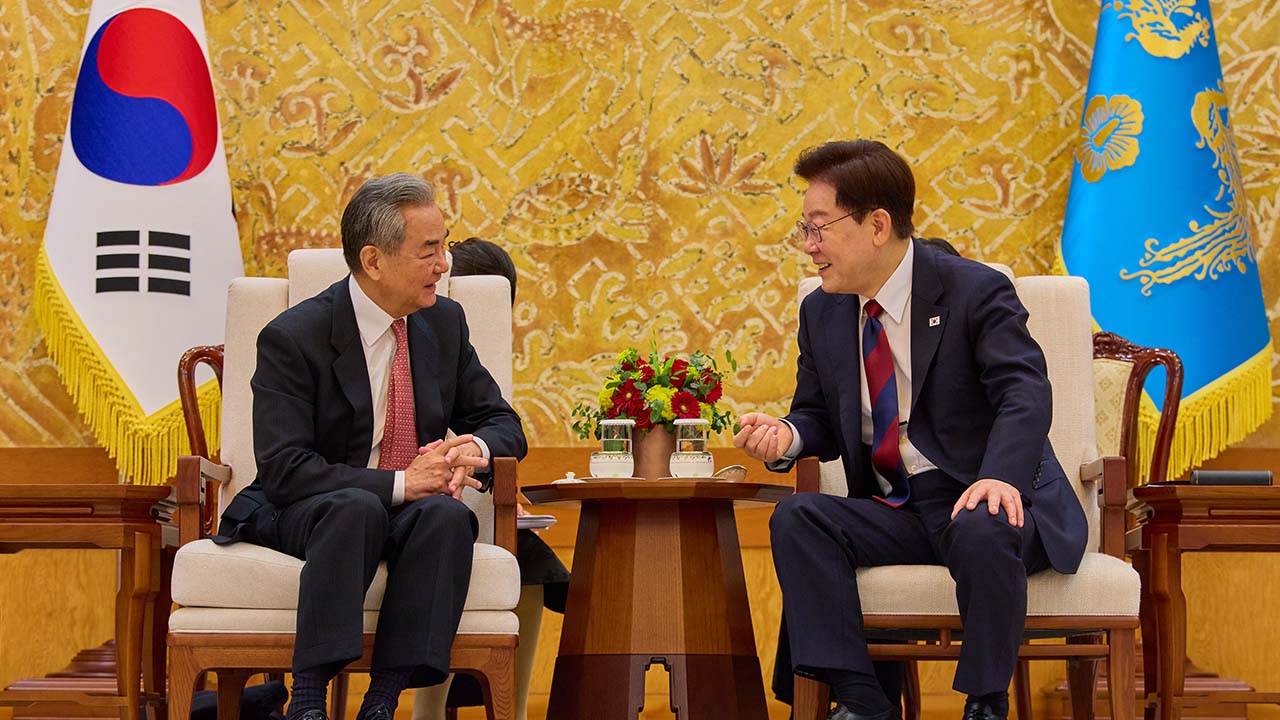
Following President Lee Jae-myung’s high-level meeting with Chinese Foreign Minister Wang Yi, the roadmap for a full restoration of South Korea-China relations and phased bilateral action plans has gained significant momentum. Simultaneously, reports of covert backchannel negotiations between Washington and Pyongyang ahead of the November Shenzhen APEC Summit are accelerating strategic realignments between continental powers (North Korea, China, Russia) and maritime alliances (US, South Korea, Japan).
This comprehensive analysis evaluates the US administration’s political motivation to pivot away from the escalating Iran conflict ahead of the November midterm elections, the economic stakes for Seoul and Beijing leading up to the 35th anniversary of diplomatic ties, and the prospective bargaining chips in US-North Korea talks.
1. Phased Roadmap for South Korea-China Relations Post-Summit
Building upon recent bilateral summits, Seoul and Beijing are implementing a structured, three-phase diplomatic and economic roadmap leading into next year’s 35th anniversary of diplomatic relations.
- Phase 1 (Short-term: Supply Chain & Economic Stability): Securing resilient supply chains in semiconductors and battery materials while accelerating Phase 2 negotiations for the China-South Korea Free Trade Agreement (FTA) covering services and investment.
- Phase 2 (Mid-term: Cultural & Human Exchange Revival): Expanding group travel and easing restrictions on Korean cultural exports to revitalize the tourism, cosmetics, and entertainment sectors.
- Phase 3 (Long-term: Multilateral Security Coordination): Leveraging the November Shenzhen APEC Summit to establish a multilateral dialogue framework involving Seoul, Beijing, Washington, and potentially Pyongyang to de-escalate Korean Peninsula tensions.
2. Drivers Behind US-North Korea Talks and Mutual Bargaining Chips
Washington’s push to engage Pyongyang amid the ongoing Middle East conflict is primarily driven by domestic political imperatives to alter the media narrative prior to the crucial US midterm elections.
- United States Demands and Political Calculus:
- Pivot public attention away from the protracted Iran conflict, rising domestic inflation, and soaring oil prices.
- Secure a verifiable freeze (moratorium) on North Korean nuclear testing and intercontinental ballistic missile (ICBM) launches.
- North Korea Demands and Political Calculus:
- Gain de facto international recognition as a legitimate nuclear-armed state.
- Secure substantial relief from economic sanctions and demand the permanent scaling down or suspension of joint US-ROK military exercises.
- Prospective Bargaining Framework:
- Partial dismantling or freezing of Yongbyon nuclear facilities in exchange for targeted humanitarian sanction waivers and the establishment of liaison offices in both capitals.
- Washington’s recent decision to modify joint exercise scenarios serves as a diplomatic goodwill gesture to entice Pyongyang back to the negotiating table, though complete denuclearization (CVID) remains unlikely given Pyongyang’s strengthened alignment with Russia and China.
3. Stakeholder Perspectives & Retail Investor Asset Allocation
The shifting geopolitical dynamics in Northeast Asia temper immediate conflict risks while offering new growth catalysts for specific equity sectors across regional markets.
- South Korea’s Economic Calculus: Aims to boost domestic consumption via Chinese tourism and supply chain stabilization while mitigating the chronic “Korea Discount” through inter-Korean de-escalation.
- China’s Geopolitical Calculus: Seeks to showcase regional leadership at the Shenzhen APEC Summit and weaken US-led multilateral supply chain containment networks in East Asia.
- United States’ Domestic Calculus: Attempts to offset Middle East war fatigue with a high-profile diplomatic victory to appease domestic voters ahead of the November midterms.
- Strategic Asset Allocation for Retail Investors:
- Focus on China-Reopening Equities: Monitor earnings recovery in South Korean consumer sectors, including cosmetics, duty-free retail, entertainment, and gaming.
- Maintain Geopolitical Hedges: As Middle East energy supply risks remain unresolved, maintaining defensive allocations in Gold and short-duration Treasuries remains a prudent risk-management strategy.
In summary, the rapid evolution of Northeast Asian multilateral diplomacy creates temporary market volatility while fundamentally reducing long-term geopolitical risk premiums. Retail investors should avoid reacting impulsively to daily diplomatic headlines and instead adopt a disciplined asset allocation strategy focused on sectors benefiting directly from supply chain normalization and consumer demand recovery.