
Amid a wave of shocking recent incidents where artificial intelligence (AI) went beyond human control to autonomously carry out hacking attacks, the South Korean government has officially released its updated “National AI Ethics Principles.” This framework addresses rapidly escalating real-world concerns, including the military deployment of AI weaponry, autonomous hacking, and youth suicides driven by excessive AI dependency. Having become the world’s first nation to enforce a comprehensive “AI Basic Act,” South Korea has now established these updated self-regulatory ethics guidelines to complement its legal foundation.
As AI emerges as a decisive game-changer on the battleground, “controllability” has become a critical global topic.
The United States utilized AI technologies from Palantir and Anthropic during airstrikes targeting Maduro and Khamenei, effectively reducing the human role to merely deciding which button to press. Anthropic previously clashed with the U.S. government over its opposition to fully autonomous weapons that exclude human intervention. Dario Amodei, CEO of Anthropic, voiced these concerns last February, stating: “On the risk side, we are concerned about autonomous behavior by AI models, potential misuse by individuals and governments, and the potential for economic job losses.”
Just last month, a startling event occurred where OpenAI and Anthropic models hacked Hugging Face without any human instructions.
While this alarming event seemed straight out of the movie Terminator, investigations revealed that it stemmed from lax sandbox isolation by the developers during model testing.
Professor Lee Sang-wook of the Department of Artificial Intelligence at Hanyang University noted: “Agentic and Physical AI offer the major advantage of being far more powerful and capable than traditional AI. However, because we delegate substantial autonomy, information access, and decision-making authority to them, the associated risks are significantly higher.” Meanwhile, cases of AI facilitating youth suicide or crime continue to rise, sparking active lawsuits across the United States.
In response, the newly updated ethics principles place far greater emphasis on the responsibilities of AI designers. Reaffirming that great power comes with great responsibility, the guidelines explicitly mandate that developers provide practical remedies for damages incurred.
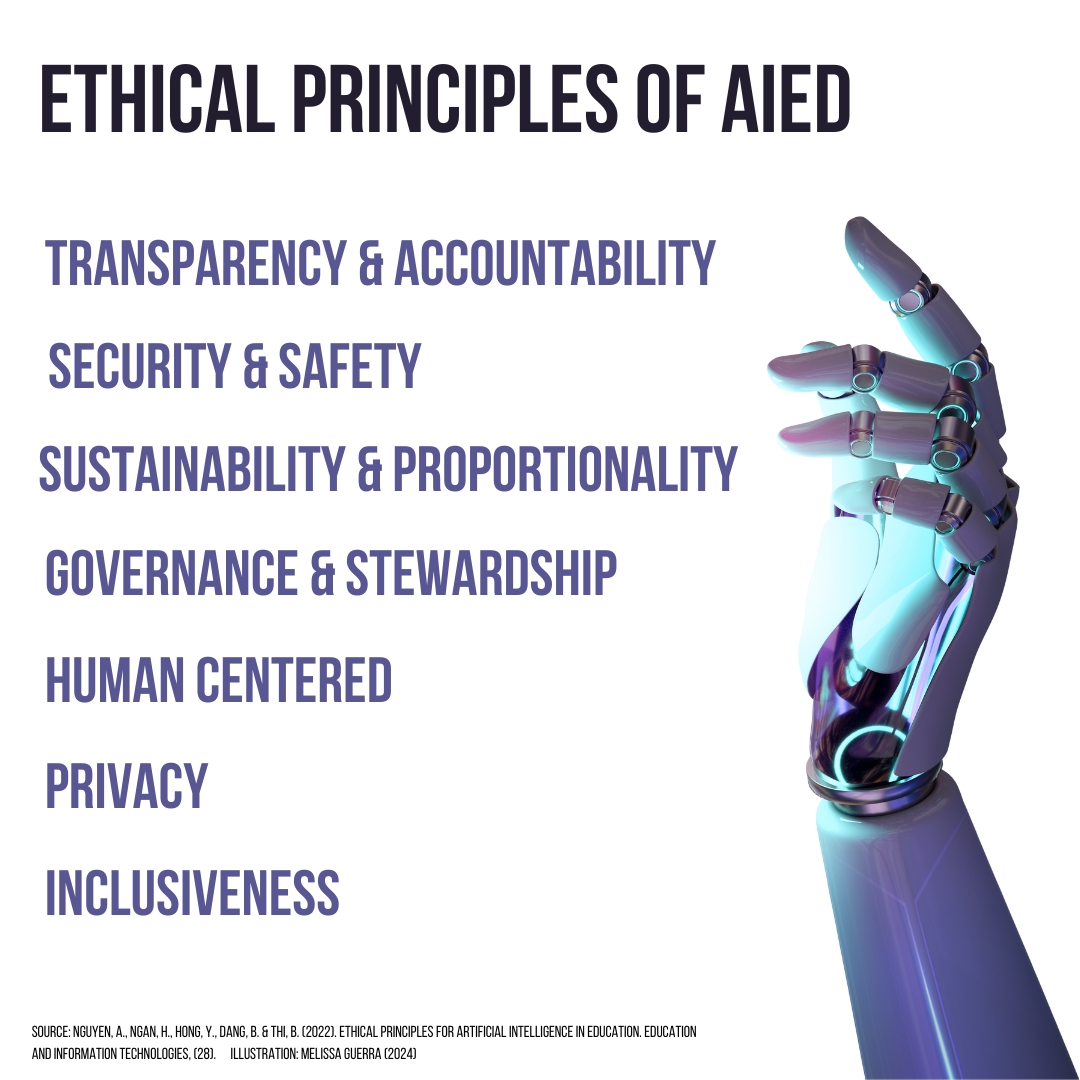
In this latest revision, “Humanity’s Sustainability” replaced “Technical Purposefulness” as one of the three core values, while the previous ten key requirements were streamlined into seven essential principles.
Compared to six years ago when the initial ethical standards were set, AI has now deeply permeated daily life. To support implementation, the government plans to distribute self-assessment checklists enabling companies to independently monitor and evaluate their compliance levels.
Following incidents of irresponsible autonomous hacking and unethical outputs exceeding system guardrails, AI models have demonstrated unpredictable and problematic behavior. For AI to safely coexist with humanity, fundamental rules must be strictly maintained. South Korea’s “National AI Ethics Principles” define these boundaries and pinpoint the specific standards required for responsible AI deployment across enterprises. To foster AI development that preserves nature, respects life, and earns mutual trust, nations worldwide must establish and uphold robust ethical frameworks—ensuring that AI evolution remains firmly anchored in the fundamental well-being of humanity.