
Discovery of ErbB4, the Alzheimer’s Vicious Cycle Switch: Biotech Paradigm Shift and Global Investment Strategy
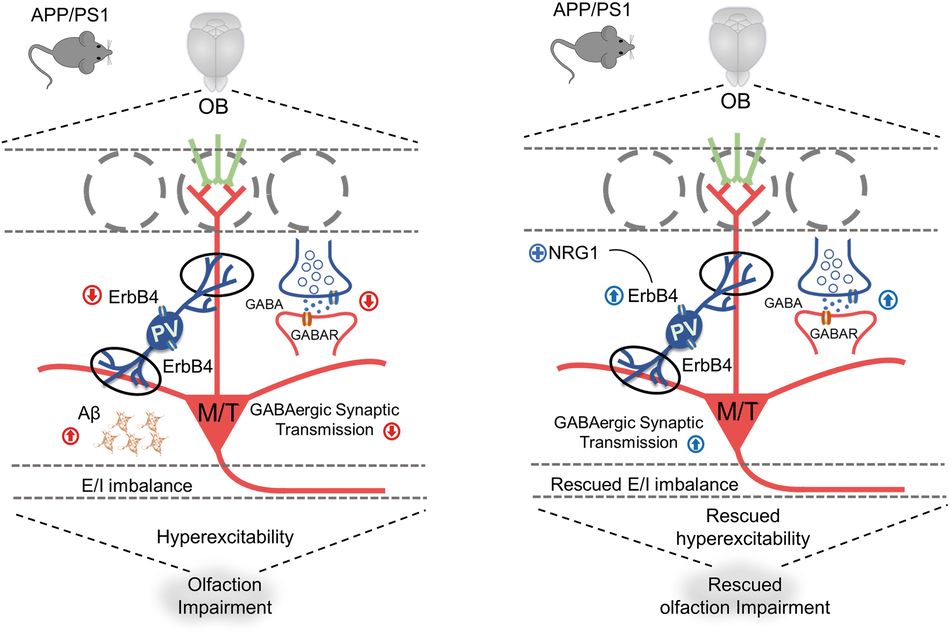
Researchers at the Institute for Basic Science (IBS) in South Korea have world-first identified ‘ERBB4’, a key protein responsible for excessive excitatory neuronal activity and synapse loss in Alzheimer’s dementia, publishing their findings in the renowned international journal Nature.
Following the recent success of Phase 3 clinical trials for personalized messenger RNA (mRNA) cancer vaccines that raised hopes for curing cancer, the discovery of a target that blocks the fundamental vicious cycle mechanism of brain diseases marks a massive technological paradigm shift for the global biotech and medical sectors.
This achievement goes beyond a simple academic discovery and is evaluated as a turning point that will rewrite the rules of the neurodegenerative disease drug development market. This article presents a multi-dimensional analysis of the paradigm shift in Alzheimer’s drug development, the global biotech R&D investment landscape, and the core strategies investors must face from short- and mid-term perspectives.
📦 1. Technical Diagnosis: Significance of ERBB4 Discovery and Differentiation from Existing Dementia Therapeutics
To fundamentally understand the pathological mechanism of Alzheimer’s, one must clearly distinguish between existing amyloid antibody treatments and the newly identified ERBB4 inhibition mechanism.
1) Limitations of Existing Treatments (Amyloid Targets)
Dementia treatments developed by global Big Pharma (such as Lecanemab and Donanemab) have focused primarily on removing amyloid-beta plaques or tau proteins accumulated in the brain. However, this approach failed to fundamentally halt ongoing neuronal hyperexcitation and synaptic damage, resulting in clear limitations in improving cognitive function and slowing disease progression in real patients.
2) Alleviating Multiple Pathologies via ‘Switch Inhibition’
The IBS research team used gene-editing technology (CRISPR) and RNA interference (RNAi) to selectively inhibit the ERBB4 protein, proving that abnormal neuronal hyperexcitation was normalized and synaptic loss was significantly reduced. This indicates that the source switch triggering the cascade of brain disease pathology can be controlled, regardless of the presence of toxic protein accumulation.
| Category | Existing Amyloid-Targeted Therapeutics | ERBB4 Inhibition-Based Therapeutics |
| Mechanism of Action | Removes accumulated proteins inside the brain | Blocks neuronal hyperexcitation & synaptic loss |
| Therapeutic Limitation | Cannot repair already damaged synapses | Controls the source switch of the pathological cycle |
| Scalability | Limited to Alzheimer’s lesions | Expandable to other brain diseases (Parkinson’s, ALS) |
📌 2. Global Biotech R&D & Brain Disease Market Investment Landscape
Accelerating population aging is projected to expand the global neurodegenerative disease treatment market to tens of billions of dollars by 2030. This research achievement will serve as a catalyst to rewrite the valuation of the entire related biotech ecosystem and redefine R&D priorities for global Big Pharma.
Core Pipelines and Global Tech Trends
- Gene Therapeutics & Target Inhibitors
- Acceleration in developing ERBB4-targeted small molecules and siRNA therapeutics
- Early-stage License-In (L/I) competition among global Big Pharma entering full swing
- Key Tech Sectors: Companies specializing in RNA interference (RNAi) and CRISPR gene editing technologies
- Blood-Brain Barrier (BBB) Penetration Technology
- Rapid increase in the value of BBB shuttle platforms, the greatest challenge in brain drug development
- Essential integration with Drug Delivery Systems (DDS) to precisely deliver ERBB4 inhibitory drugs into the brain
- Key Tech Sectors: Biotechs holding bispecific antibody-based BBB shuttle platforms
- AI-Based Neoantigen & Protein Structure Analysis
- Increased speed in deriving custom Lead Compounds through ERBB4 binding site analysis
- Shortened clinical trial design timelines for indication expansion into Parkinson’s, ALS, etc.
- Key Tech Sectors: Deep-tech companies focusing on AI protein structure prediction and drug discovery
💡 3. Key Points to Watch & Asset Allocation for Short- and Mid-Term Investors
While R&D in Alzheimer’s and neurodegenerative diseases offers high market size and expected return rates, it carries immense technical risks and high failure rates during clinical trials. Investors must clearly understand and approach step-by-step verification points.
① Short-Term Watchpoints (6 Months – 1.5 Years): ‘Nature Publication Illusion’ & Early-Stage Risk Management
- Limitations of Pre-clinical Stage: This discovery represents basic research conducted in animal models (mice). It takes at least 7 to 10+ years and massive capital investment to navigate candidate selection, toxicity evaluation, and Clinical Phases 1, 2, and 3 before commercialization.
- Caution Against Overheated Theme Stocks: Investors should strictly avoid impulsive panic buying (FOMO trading) of early-stage gene-editing or dementia theme stocks surging purely on ERBB4-related buzzwords.
② Mid-Term Watchpoints (2 Years – 5 Years): Big Pharma License Transfers (L/I) & Feasibility Verification
- Verifying BBB Permeability & Safety Data: Quantitative data monitoring is required in non-human primate studies and Phase 1 human clinical trials to verify whether ERBB4 inhibitors are safely delivered to brain cells without off-target side effects.
- Tracking Big Pharma Deal Volumes: The true inflection point for fundamental improvement occurs when biotechs holding core technologies sign Material Transfer Agreements (MTA), joint research projects, or large-scale License-Out (L/O) deals with global pharmaceutical giants.
③ Asset Allocation Strategy for Investors
Excessive concentration in single high-volatility biotech stocks is dangerous.
- Portfolio Weight: Cap the biotech sector allocation at 10–15% of total assets.
- Core-Satellite Strategy: Establish a stable base focused on large-cap global healthcare ETFs (e.g., XLV, IBB), then diversify into specialized niche biotechs possessing proprietary BBB shuttle platforms or gene therapy technologies.