
Korea-Uzbekistan Critical Minerals Partnership & Middle Corridor Analysis
The critical minerals and energy supply chain partnership established during the Korea-Uzbekistan Summit represents a major strategic turning point for South Korea’s high-tech manufacturing sector. Designed around our 3 Core Subscriber Principles (Intuitive Metaphors, Practical Market Impact, and Objective Risk Analysis), this report delivers an in-depth analysis of the alliance and the emerging Eurasian logistics corridor.
1. Uzbekistan’s Mineral Reserves & Korea’s Reverse Strategy
1) Resource Status: “Central Asia’s Sleeping Mineral Giant”
Uzbekistan is a mineral powerhouse in Central Asia, yet only approximately 30% of its total buried mineral reserves have been commercially developed—making it an untapped goldmine.
| Mineral | Global Rank & Characteristics | Key Applications & Link to Korean Industry |
|---|---|---|
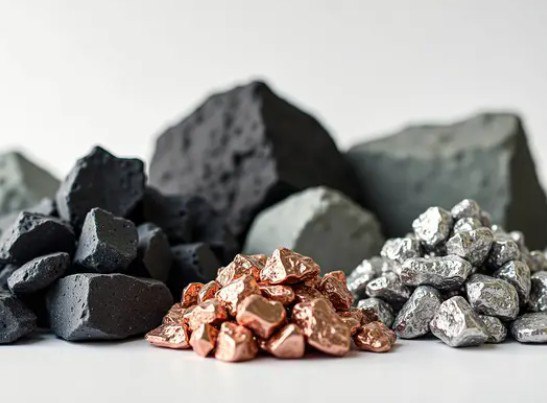
| Tungsten | Top 7 globally in reserves | Ultra-fine semiconductor process gas, ultra-hard cutting tools, defense |
| Molybdenum | Top 12 globally in reserves | Performance additives for EV battery cathodes, special alloy steel, aerospace |
| Copper | Top 11 globally in reserves | Electric vehicles, solar/wind generation equipment, national power grids |
| Lithium & Graphite | Extensive ongoing exploration | Next-generation battery materials (essential for anodes and cathodes) |
💡 Intuitive Analogy
Uzbekistan is like a fertile farmland packed with top-grade spices and key ingredients buried underground. Lacking advanced refining and processing technology, it previously exported raw materials directly or left them unmined.
2) Korea’s Reverse Strategy: “Moving Beyond Mining to Build Value Chains”
Rather than acting as a mere ‘buyer’ of raw materials, South Korea is executing a strategic reverse maneuver by building an integrated joint Value Chain directly in Central Asia.
- Overcoming Dependence on China: South Korea currently relies on China for 80–90% of its key rare metals like tungsten and molybdenum. Securing a direct supply chain with Uzbekistan serves as an essential ‘resource security policy’ amid geopolitical shifts.
- Merging Tech with Resources (Rare Metals Center): By transferring advanced Korean smelting and processing technology to local facilities, high-grade refined materials are produced directly within Uzbekistan.
- Reverse Infrastructure Exports: Refining minerals requires large-scale electricity grids and chemical plants. In exchange for critical minerals, Korean companies win major contracts for power grid construction, green energy (solar and nuclear), and gas-chemical plants.
3) Investor Risk Assessment
- ① Landlocked Limitations (Logistics Risk) [★★★☆☆]: While being a double-landlocked nation presents logistical hurdles, the rapid expansion of the ‘Middle Corridor’ following the Russia-Ukraine conflict is steadily boosting transit reliability.
- ② Geopolitical Neutrality & Pro-Korea Sentiment [★★★★☆]: Uzbekistan maintains pragmatic neutrality despite US-China and Russia-Ukraine tensions. High local affinity toward South Korea supports stable operations for over 700 Korean-invested enterprises.
- ③ Institutional Reforms & Financial Backing [★★★★☆]: Strong market-friendly reforms under President Mirziyoyev, combined with Korean EDCF (Economic Development Cooperation Fund) financing, significantly reduce capital recovery risks for investors.
📌 Investor Summary (Practical Impact)
- Beneficiary Sectors: Tungsten/Molybdenum/Copper refining and trading, Gas-Chemicals, Power Grids, Smart Cities, Solar Power & ESS (Energy Storage Systems).
- Key Takeaway: A powerful long-term growth driver combining Korean processing tech + Uzbek mineral reserves + Inter-governmental financial backing.
2. The New Logistics Route: Understanding the Middle Corridor
The Middle Corridor (Trans-Caspian International Transport Route, TITR) has emerged as the premier alternative logistics route connecting Asia and Europe, bypassing the traditional Russian Northern Corridor following the Russia-Ukraine war.
[East Asia (Korea / China)] │ (Rail & Coastal Freight) ▼[Xinjiang, China (Kashgar / Khorgos)] │ (Trans-Central Asia Railway) ▼[Kazakhstan (Ports of Aktau / Kuryk)] │ (🚢 Trans-Caspian Maritime Transit) ▼[Azerbaijan (Port of Baku)] │ (BTK Railway: Baku-Tbilisi-Kars) ▼[Georgia & Türkiye] ──(Black Sea / Overland)──► [Across Europe (EU)]
1) Three Major Structural Risks (Objective Analysis)
| Risk Type | Bottlenecks & Operational Challenges |
|---|---|
| ① Transshipment Risk | Multi-modal transport (Rail ➔ Ship ➔ Rail) leads to extended handling times and higher logistical costs. |
| ② Caspian Sea Constraints | Declining water levels, seasonal severe winds, and limited vessel/port capacities create operational bottlenecks. |
| ③ Multi-Border Customs Delays | Transiting through multiple sovereign nations involves navigating differing customs standards and tariffs. |
2) Risk Mitigation & Stabilization Measures
- Maritime Infrastructure Expansion: Port facilities in Aktau (Kazakhstan) and Baku (Azerbaijan) are undergoing extensive modernization to double container handling capacity alongside dedicated ferry deployments.
- Digital Customs Integration: Guided by the TITR Association, transit countries are establishing unified tariffs and deploying blockchain/IoT-enabled real-time cargo tracking and digital customs clearance.
- EU Capital Injection: The European Union has designated the Middle Corridor as a strategic bypass route, committing billions of Euros via its ‘Global Gateway’ initiative for infrastructure upgrades.