
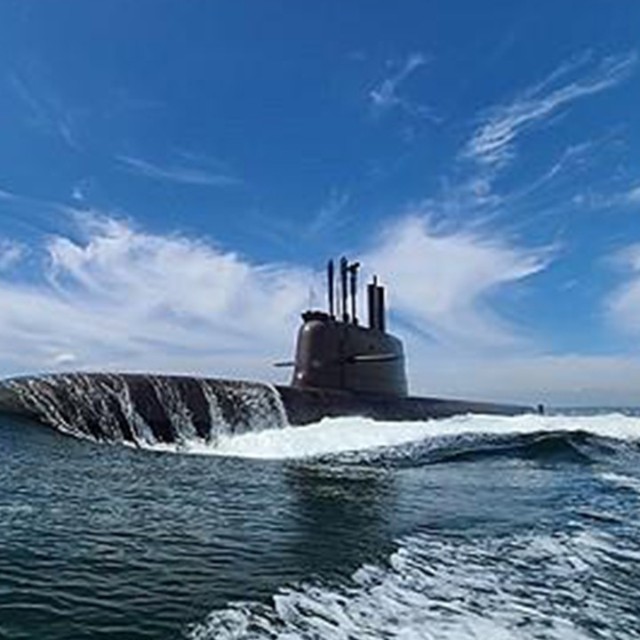
On the occasion of the unveiling of the ROK Navy’s latest 3,600-ton submarine, Seo Hee, we provide a detailed analysis of K-defense’s maritime strategy and Hanwha Ocean’s future growth drivers for general readers and professional investors alike.

(Hanwha Ocean’s 3,600-ton submarine at Geoje Shipyard)
Starting with the introduction of German technology (Jang Bogo-I) in the 1990s, South Korea has leaped into becoming the world’s 8th country to independently design and build medium-sized submarines over 3,000 tons in just 30 years.
Beyond mere shipbuilding capabilities, South Korea is densely establishing a global supply chain and maintenance ecosystem through Memorandums of Understanding (MOUs) with major overseas defense, energy, and technology companies.
- Technology Localization and Adaptation: Completely internalized Air-Independent Propulsion (AIP) and lithium-ion battery systems that enable underwater submerged operation for several weeks without air.
- Global MOU Relevance: Signing MOUs for MRO (Maintenance, Repair, and Overhaul), training, and technology transfer with local shipyards and global defense contractors to enter overseas submarine projects in Canada, Poland, and the Philippines. This serves as a powerful asset providing a packaged solution that builds local industrial infrastructure alongside finished platform exports.
1. Core Specification Showcase of Seo Hee
As the second vessel of the Jang Bogo-III Batch-II class, Seo Hee features significant upgrades in size, firepower, and submerged endurance compared to the previous Batch-I (Dosan An Chang-ho).
| Category | Jang Bogo-III Batch-I (Dosan An Chang-ho) | Jang Bogo-III Batch-II (Seo Hee) | Growth Highlights |
| Displacement / Length | 3,000-ton class / 83.5m | 3,600-ton class / 89m | Expanded living quarters and payload bay via hull enlargement |
| Propulsion Power | Lead-acid battery + AIP | Lithium-ion battery + AIP | 2x energy density increase; world’s longest submerged endurance |
| Vertical Launch System (VLS) | 6 cells | 10 cells | 66% increase in SLBM (Submarine-Launched Ballistic Missile) strike capability |
| Localization Rate | Approx. 76% | 80%+ | Secured maintenance independence and minimized export constraint factors |
2. Geopolitical Background: Behind the Scenes of the Canadian Project & US Nuclear Submarine Deal
Canadian CPSP Project: Why Did Germany Take the Lead?
In the Canadian Patrol Submarine Project (CPSP) valued at up to KRW 60 trillion, Hanwha Ocean’s KSS-III Batch-II received high evaluations for its independent performance and rapid delivery timeline. However, preferred negotiator status went to Germany’s TKMS (212CD).
- NATO Interoperability: Canada is a core NATO member sharing the Atlantic and Arctic Oceans. Because Germany and Norway had already jointly decided to adopt the 212CD, it offered significant advantages in spare parts sharing and maintenance infrastructure utilization.
- Diplomatic & Security Blocs: Beyond simple weapon performance comparisons, the European-NATO-centric security alliance posture decisively influenced Canada’s choice. (Hanwha Ocean maintains its reserve supplier status in preparation for future negotiations.)
US Nuclear Submarine Proposal and MRO Strategy
Behind the United States implicitly hinting at South Korea possessing nuclear-powered submarines or strengthening Atlantic security lies the stagnation of the US shipbuilding industry itself.
- Limitations of the Jones Act: Under US law, new construction of US Navy vessels is restricted strictly to shipyards located within the United States. However, maintenance continues to face delays due to a lack of capacity at local US shipyards.
- Alliancing with South Korea: The US plans to leverage South Korea’s superior manufacturing and overhaul capabilities by entrusting US Navy combat vessel MRO to Korea, thereby sharing the burden of Pacific-Atlantic security.
3. Hanwha Ocean’s Future Business and Investment Key Takeaways
[Hanwha Ocean Naval Defense Growth Stages]Stage 1: Completion of diesel submarine technology & lithium-ion battery integration (Seo Hee) │Stage 2: Entry into US Navy MRO business & securing a local US base (Philly Shipyard) │Stage 3: Establishment of integrated AI systems pairing Unmanned Underwater Vehicles (UUVs) with manned submarines
- Securing a Local US Production Base: Bypassed US Jones Act regulations through the acquisition of Philly Shipyard in Philadelphia by Hanwha Group, laying the groundwork to directly enter the US Navy vessel maintenance and new shipbuilding markets.
- Diversification of Diesel Submarine Exports: Expanding diesel submarine export territory to Southeast Asian, Middle Eastern, and South American markets prioritizing cost-effectiveness and operational availability, rather than Europe with its high NATO entry barriers.
- Sustainable Revenue MRO Subscription Model: Creating a long-term, stable profit structure by packaging integrated logistical support, parts supply, and performance upgrade services that extend over a 30- to 40-year operational lifecycle after construction.
Below is a comprehensive summary of the acquisition effects of Philly Shipyard in the US, US Navy vessel MRO contract achievements, and future business outlook currently pursued by Hanwha Ocean.
4. Philly Shipyard Acquisition Effect: Direct Local Entry into the US and Bypassing Regulations
In 2024, Hanwha Group (Hanwha Ocean and Hanwha Systems) became the first Korean shipbuilder to acquire Philly Shipyard in Philadelphia, Pennsylvania, securing a decisive foothold for entering the US naval defense market.
| Category | 1. Jones Act Bypass | 2. Local Construction Hub for US Vessels |
| Core Effect | Acquired eligibility to build US coastal & government vessels | Direct entry into the US Department of Defense supply chain |
| Details | • Overcame legal regulations prohibiting overseas construction • Eligible to bid on coastal operating vessels and government ships in the US | • Established local construction foundation for US Navy logistics support ships & surface combatants • Created a direct bridgehead for US Navy vessel projects |
- Overcoming the Jones Act & Government Vessel Construction Regulations: Under US law, commercial vessels operating between US ports, government vessels, and US Navy ships must be built exclusively in domestic US shipyards. Through the acquisition of Philly Shipyard, Hanwha Ocean can directly transplant the superior design and productivity know-how of Korean shipyards into local US facilities.
- Securing a Monopolistic Position in the US Defense Supply Chain: Holding a local US shipyard means gaining eligibility to bid on new vessel construction (New Construction) for the US Navy, going beyond simple MRO contracts. Entering 2026, Hanwha Ocean is accelerating facility modernization and smart yard construction at Philly Shipyard to elevate local production capacity.
5. US Navy MRO Contract Status: Establishing a Leading Position
Hanwha Ocean is building a dominant market presence in the US Navy vessel MRO market, recording contract achievements well ahead of its competitors.
- First US Navy Vessel MRO Contract in Korea: In August 2024, Hanwha Ocean opened the domestic MRO market for the US Navy by winning the overhaul project for the US Navy dry cargo ammunition ship USNS Wally Schirra.
- Continuous Follow-up Contract Rally: Across 2025 and the first half of 2026, Hanwha Ocean steadily built up its MRO track record by consecutively securing overhaul contracts for supply ships and combat vessels belonging to the US 7th Fleet. Utilizing domestic repair cluster networks (Jinhae, Busan, etc.) alongside the Geoje Shipyard, Hanwha Ocean gained the trust of the US Navy by completing maintenance and dispatching vessels with remarkable speed.
[MRO Contract Expansion Stages]Stage 1: Successful completion of MRO for US 7th Fleet logistics support ships (fleet replenishment oilers, dry cargo ships) │Stage 2: Expansion of MRO domain to US Navy surface combatants (destroyers, frigates) │Stage 3: Parallel execution of US mainland MRO and new vessel construction utilizing Philly Shipyard
6. Future Business Outlook and Growth Strategy
① Scaling Up from MRO to ‘New Construction of US Navy Vessels’
The United States is restructuring its naval forces through initiatives like the ‘Golden Fleet’ concept to resolve maintenance backlogs and production capacity shortages. The trust accumulated with the US Department of Defense through MRO projects is expected to lead to winning next-generation US Navy supply ship and combatant new construction projects at Philly Shipyard.
② High-Profitability Model Covering the Entire Vessel Life-Cycle
Shifting away from the traditional shipbuilding model of simply constructing and delivering ships, Hanwha Ocean is transitioning to a high-value-added lifecycle business structure that integrally provides ‘Design → Construction → 30 to 40 years of MRO and Performance Upgrades.’
③ Synergy with Hanwha Defense Affiliates (Hanwha Systems & Hanwha Aerospace)
By combining Hanwha Systems’ radar, Combat Management Systems (CMS), and ICT capabilities with Hanwha Ocean’s naval shipbuilding expertise, the group presents an integrated package solution supplying not just the vessel’s ‘body’ but also its ‘brain’ to the US Navy and global markets.
💡 Key Watchpoints for Investors and Readers
- Transformation Speed of Philly Shipyard: How quickly US shipbuilding productivity can be elevated by transplanting Korean-style smart yard technology remains the core factor for future profitability.
- Expansion of Target Vessels for MRO: Close observation is needed to see if the contract scope expands from support ships to core US Navy combatants (such as Aegis destroyers).
- Application of Defense Multiples: Aligned with changing global security environments, establishing itself as a core partner in the US Navy supply chain allows the company to receive a corporate valuation re-rating beyond that of a traditional manufacturer.