
“Leaping to a Strategic Partnership and Checking Feasibility”
Deep-Dive Analysis of Key Agendas at the Korea-Mexico Summit and Investment Insights
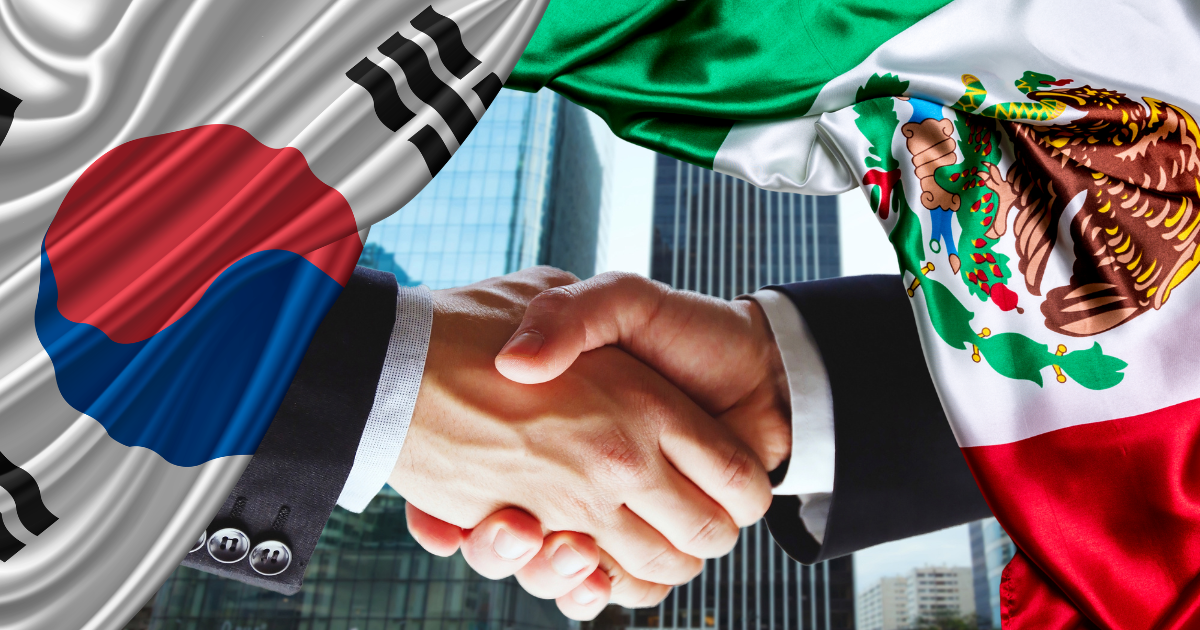
The recent summit between President Lee Jae-myung and Mexican President Claudia Sheinbaum marked a major turning point, elevating bilateral relations to the highest level in 16 years. Beyond mere diplomatic rhetoric, this summit served as a stage for pragmatic diplomacy where the interests of both nations precisely aligned amid the reshaping of global supply chains.
This report provides a multi-dimensional analysis of the three core agendas discussed during the summit using a framework of [Mexico’s Needs – Core Agenda – Feasibility & Limits – Investor Perspective].
1. Trade, Investment, and Supply Chain: ‘Plan México’ and Economic Cooperation Infrastructure
Mexico’s Needs (Structural Background)
The Sheinbaum administration is aggressively pushing ‘Plan México’ to strengthen national industrial competitiveness and expand infrastructure. Amid uncertainty surrounding the review of the United States-Mexico-Canada Agreement (USMCA) and heightened U.S. regulations against China, consolidating Mexico’s position as a ‘nearshoring’ hub for global companies aiming for the North American market has become an urgent priority. Consequently, Mexico urgently needs supply chain diversification and investment attraction from South Korea, a country with strong manufacturing capabilities.
Agenda Discussion & Feasibility Assessment
- Revision of the Investment Guarantee Agreement Concluded After 7 Years (Feasibility: Highest)
- Content: Institutional mechanisms were established to strengthen investor protection procedures and reduce investment risks in the financial and raw material sectors.
- Analysis: With parliamentary ratification pending, the rights of Korean companies operating locally regarding capital recovery and asset protection will be significantly reinforced. This will act as a direct catalyst for expanding Foreign Direct Investment (FDI) into Mexico.
- Customized Trade Agreement and New Raw Material Channels (Feasibility: High)
- Content: To avoid friction over sensitive items (such as agricultural products) that typically arise during full-scale FTA negotiations, both nations agreed to pursue a lower-tier ‘Comprehensive Economic Cooperation Trade Agreement.’ Additionally, inter-departmental dialogue channels for crude oil and critical minerals will be established.
- Analysis: Mexico’s desire to secure stable resource exports aligns perfectly with Korea’s interest in diversifying its supply chain for critical minerals used in batteries and semiconductors.
Professional Investor Insights
Practical financial support infrastructure was established alongside these agreements, including a new $100 million inter-bank credit line. This significantly lowers the entry barrier for Korean small and medium-sized component manufacturers entering the Mexican market. Tangible benefits are expected across auto parts, secondary battery materials, and logistics/infrastructure construction sectors.
2. K-Defense: Military Modernization, Local Production, and Joint Entry into Third Countries
Mexico’s Needs (Structural Background)
Mexico faces an impending need to replace aging military equipment—specifically air force trainers and light attack aircraft—making its ‘Military Modernization Project’ a long-standing national objective to enhance public security and defense capabilities. The Mexican government seeks not merely to import finished products, but to develop its domestic aerospace and defense infrastructure through technology transfer and local production.
Agenda Discussion & Feasibility Assessment
- Defense Cooperation MOU & Local Production Model for FA-50 (Feasibility: Medium-High)
- Content: President Lee presented the indigenous FA-50 light attack aircraft as an optimal model for modernizing the Mexican Air Force. Moving beyond simple sales, he proposed a vision involving local assembly line production and joint entry into third-country Latin American markets.
- Analysis: This is a win-win model allowing Mexico to secure regional security leadership in Latin America while enabling South Korea to establish a defense hub in the region.
Professional Investor Analysis & Risk Factors
- Phased Entry Scenario: Considering Mexico’s budget execution capabilities and political dynamics in U.S.-Mexico relations, a phased rollout is most probable: [Phase 1: Export of finished aircraft/parts] → [Phase 2: Local Knock-Down (CKD) production] → [Phase 3: Joint marketing].
- Monitoring Points: Given the lead time required until contract execution, tracking systems integrators (such as KAI) and aerospace supply chain companies from a mid-to-long-term perspective is a more effective strategy than focusing on short-term momentum.
3. K-Culture & Consumer Goods: Soft Power Alliance and Market Expansion
Mexico’s Needs (Structural Background)
As the top consumer of Korean cultural content in Latin America, Mexico aims to integrate the surging Hallyu (Korean Wave) trend into its institutional framework. The primary goal is to fulfill the cultural demands of its youth demographic while generating economic synergies across the culture and tourism industries.
Agenda Discussion & Feasibility Assessment
- Establishment of a K-Pop Cultural Center & Launch of a Working Group (Feasibility: Highest)
- Content: President Sheinbaum personally highlighted the initiative to establish a cultural center. Both nations agreed to launch a working group within the year for joint content production, alongside official expectations for a BTS visit to Mexico in 2027.
- Analysis: With strong political will from both governments, tangible near-term outcomes (such as site selection for the center and confirmation of cultural exchange programs) are highly likely to materialize quickly.
Professional Investor Insights
Cultural content serves as a beachhead for consumer goods exports. The popularity of K-Pop and Korean dramas will accelerate the market penetration of K-Food (food & beverage), K-Beauty (cosmetics), and e-commerce/retail companies across Latin America. Investors should pay attention to the spillover effect as brand influence expands from Mexico into the broader South American region, including Brazil and Argentina.
💡 Executive Summary & Investment Strategy
Beyond a routine diplomatic event, the Korea-Mexico Summit simultaneously generated two core values: securing a North American supply chain bypass (hardware) and establishing a cultural hub in Latin America (software).
| Category | Key Beneficiary Sectors | Key Momentum & Investment Keywords |
| Supply Chain / Infrastructure | Auto Parts, Battery Materials, Logistics & Construction | Revision of Investment Guarantee Agreement, Utilization of Inter-bank Credit Line, Nearshoring Benefits |
| Defense Industry | Aerospace, Defense Systems Integration & Components | Discussions on Local FA-50 Production, Establishing a Latin American Hub, Defense Cooperation MOU |
| Consumer Goods / Content | Entertainment, K-Food, K-Beauty, Retail | Establishment of K-Pop Center, Activation of Govt Working Group, Brand Premium Expansion |
Investors should monitor the progress of sector-specific working groups launching within the year and track the parliamentary ratification schedule, while considering mid-to-long-term strategies to accumulate leading equities during market pullbacks.