
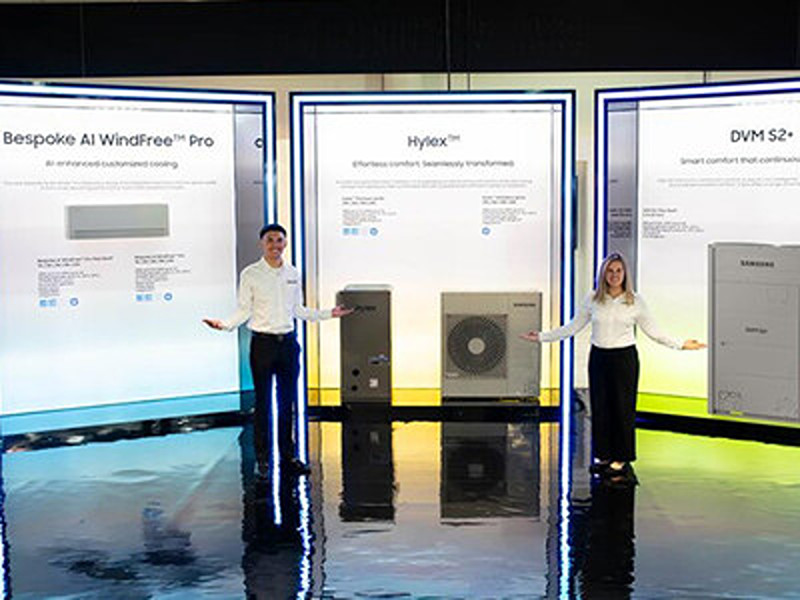
The “Heat Pump Technology for Simultaneous Apartment Cooling, Heating, and Hot Water Supply via a Single Outdoor Unit” announced by Samsung Electronics and LG Electronics represents a flagship solution for South Korea’s Green Transformation (K-GX), transitioning residential energy usage from fossil fuels to electrification.
1. Technical Operating Principles (Simultaneous Operation via a Single Outdoor Unit)
In traditional apartment environments, air conditioners (cooling), floor heating boilers (gas/oil), and water heaters operated independently. In contrast, the integrated heat pump system combines a thermodynamic refrigeration cycle with simultaneous heat recovery technology to deliver all three functions using a single outdoor unit.
┌─────────────────────────────────────────────────────────┐│ Integrated Outdoor Unit ││ (Inverter Compressor + 4-Way Valve + Heat Exchanger) │└───────────┬─────────────────┬───────────────────┬───────┘ │ │ │ ▼ ▼ ▼ [Indoor Cooling/Heating] [Hydronic Floor Heating] [Domestic Hot Water] (Air-to-Air) (Air-to-Water) (Heat Recovery Storage)
- 4-Way Reversing Valve Control:
- Summer (Cooling Mode): Unlike conventional systems that extract indoor heat and discard it outside, this system captures waste heat absorbed from indoors and routes it to the hot water storage tank to heat water—creating a powerful synergy of simultaneous cooling and zero-cost hot water generation.
- Winter (Heating/Hot Water Mode): It absorbs thermal energy from outdoor air to heat water circulating through hydronic floor pipes while supplying thermal energy to the hot water tank.
- Air-to-Water & Air-to-Air Hybrid Heat Exchange: Indoor air temperature is controlled via direct air circulation, whereas floor heating and domestic hot water supply transfer heat to water via a plate heat exchanger.
- Inverter Compressor Variable Load Control: When demand for cooling, heating, and hot water varies in real time, the system dynamically adjusts compressor speed to prevent unnecessary power consumption.
2. Green Energy & Environmental Assessment
Conclusion: Highly effective as a viable Green Energy solution.
- Energy Amplification Mechanism (COP 3.0–4.0): Gas boilers convert less than 100% of input gas energy into heat (efficiency of 85–95%). In contrast, a heat pump absorbs thermal energy from the ambient air to produce 3–4 kW of heat per 1 kW of electricity consumed (efficiency of 300–400%).
- Synergy with Power Grid Decarbonization: While the heat pump itself relies on electricity, operating it on a power grid with high shares of renewable energy (solar, wind) or nuclear energy enables near-zero carbon emissions in practice.
- Space and Waste Heat Efficiency: Halving the required outdoor equipment footprint maximizes balcony and utility space in apartments, while eliminating indoor and outdoor pollutant emissions associated with gas combustion.
3. Practical Feasibility & Economic Value Analysis (User Perspective)
The practical value and economic benefits experienced by end users are summarized below:
| Category | Legacy System (Gas Boiler + AC) | Integrated Heat Pump System | Perceived User Value |
| Footprint | Boiler room + 2–3 outdoor units | 1 integrated outdoor unit + single piping | Improved space utilization & exterior aesthetics |
| Energy Source | Town gas + Electricity (Split bills) | Single electricity source | Unified billing & high-efficiency operation |
| Operating Cost | Exposure to rising gas prices | Potential progressive electricity tier risks | AI-driven Smart Energy Management required |
| Safety | Gas leak, toxic gas & fire risks | Zero fossil fuel combustion | Enhanced indoor air quality & safety |
- Feasibility Summary: Reclaiming waste heat during summer cooling provides hot water at virtually no additional energy cost, significantly boosting annual integrated energy efficiency. However, under progressive electricity tariff structures, AI-based smart load-shifting and power distribution control serve as critical factors for cost optimization.
4. Global Market Potential & Investor Perspective
From an investment standpoint, the global heat pump market represents a high-growth sector benefiting directly from structural policy tailwinds.
① Scientific and Climate Market Competitiveness
- European (EU) Market: Under the REPowerEU initiative to reduce gas dependency post-Russia-Ukraine war, legislation banning gas boilers is expanding rapidly. Demand for Air-to-Water heat pumps (AWHP) is experiencing explosive growth.
- North American Market: The Inflation Reduction Act (IRA) offers tax credits of up to $2,000 for residential heat pump installations.
- Strengths of the Korean Apartment Model: Korean manufacturers (Samsung and LG) possess world-class compact engineering optimized for high-density urban environments (high-rise apartments) along with seamless integration into smart home platforms (SmartThings, ThinQ).
② Investment Viability Analysis (Buy / Investment Thesis)
[Investment Drivers] 1. Policy Tailwinds ───► Korean Gov 2035 target of 3.5M units (Solid domestic baseline) 2. B2B Expansion ───► Large-scale supply contracts for new high-rise residential complexes 3. Global Exports ───► Premium exports driven by stricter EU/US heating regulations
- Upside Catalysts:
- Represents a structural shift from single consumer appliances (standalone ACs) to high-margin B2B building materials and HVAC system integration, serving as a key re-rating catalyst for corporate valuations.
- The South Korean government’s target to deploy 3.5 million units by 2035 (reducing 5.18 million tons of greenhouse gases) provides a strong domestic demand backstop.
- Risk Factors:
- Intense competition from established European HVAC specialists (Daikin, NIBE, Vaillant, etc.).
- Higher initial capital expenditure (CAPEX) compared to traditional individual gas boilers.
Summary
The single-outdoor-unit integrated heat pump system from Samsung Electronics and LG Electronics is more than a household appliance—it is a foundational technology driving residential energy decarbonization through electrification. For investors, this represents a long-term structural growth engine leading a generational shift in the global HVAC market rather than a short-term product cycle.
