
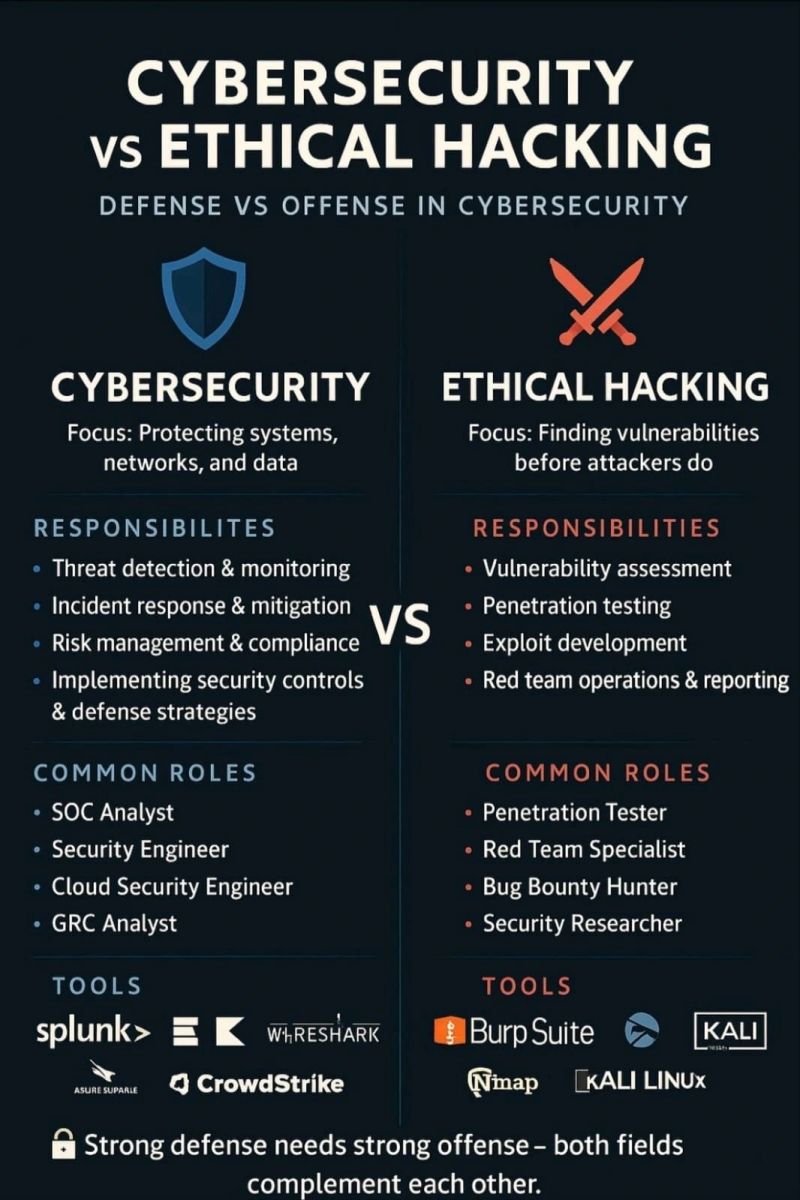
The incident in which “Artex,” an artificial intelligence (AI)-based penetration testing tool, was repurposed from defensive to offensive cyberattacks—leading its developer to make the source code private—clearly illustrates the governance dilemmas surrounding dual-use technology.
There is a very thin line between defensive hacking tools and offensive cyber weapons. As software expands into autonomous decision-making domains—such as AI data centers, AI-integrated robotics, and humanoids—the necessity for control and regulation becomes increasingly urgent.
From the perspective of general readers, this article provides a step-by-step analysis of the limitations of international law, the standardization of right and wrong, the feasibility of international cooperation beyond national hegemony, and systematic standardization measures extending to critical infrastructure and robotics.
1. Feasibility of International Laws for Controlling Cyber Attack and Defense AI Technologies
Enacting a unified, binding international treaty that simply outlaws offensive AI tools is practically extremely difficult. However, the formation of international frameworks within a pragmatic scope is currently underway.
- The Dual-Use Dilemma: Penetration testing (Red Teaming) tools are essential defensive assets used to identify security vulnerabilities before attackers do. Just as a knife can be used for cooking or crime, prohibiting the technology itself merely ties the hands of defenders.
- Limitations of International Treaties: Cyberspace is characterized by strong asymmetry and anonymity. Unlike nuclear or chemical weapons, cyber capabilities are difficult to physically verify and often serve as covert, state-sponsored cyber warfare assets. Consequently, nations are hesitant to sign binding international laws that restrict their core offensive capabilities.
- Practical Control Directions (Shifting the Regulatory Paradigm):
- Export Controls (Expanding the Wassenaar Arrangement): Strengthen international export controls on high-performance AI pentesting tools and autonomous attack software that can be directly weaponized for cyberattacks.
- Responsible Disclosure Standards: Legally require safety guardrails and anti-misuse clauses in open-source licenses, mandating that security vulnerabilities be disclosed only through designated procedures.
2. Standardization of ‘Right and Wrong’ and Global Standards Beyond Hegemony
When defining “what is right” in AI and cyberspace, nations often prioritize national security and industrial protectionism. However, concrete guidelines exist to establish global standards while bypassing geopolitical hegemony.
[ Value/Political-Centered (Causes Conflict) ] ---> [ Functional/Safety-Centered (Common Consensus) ] e.g., "Who represents good?" e.g., "Standardizing maximum autonomous authority to prevent system loss-of-control"
- Standardizing Procedural and Technical Safety Standards (ISO/NIST Model): Instead of seeking political definitions, set the common denominator target as technical safety and minimizing civilian damage.
- International standards organizations have already established frameworks such as ISO/IEC 42001 (AI Management System) and the NIST AI RMF (AI Risk Management Framework) for early detection of AI security risks and safety certification systems.
- Treaty Banning Attacks on Critical Civilian Infrastructure: Banning AI cyberattacks against critical civilian infrastructure—such as finance, healthcare, power grids, and transportation—is an area where major powers (including the US, China, and Russia) can reach consensus to prevent mutual destruction.
3. Feasibility of Systematic Standardization: From AI Data Centers to AI-Integrated Robotics and Humanoids
When software-level hacking tools combine with AI data centers, AI robotics, and humanoids that operate in the physical world, their impact escalates into physical threats. Below is a systematic feasibility analysis across three key layers:
[ Layer 3 ] AI-Integrated Robotics & Humanoids └─ Physical Hardware Kill-Switch | Physical Spatial Geofencing ▲ │[ Layer 2 ] AI Data Centers & AI Agents └─ Model Access Control (IAM) | Sandbox Isolation | Action Log Traceability ▲ │[ Layer 1 ] Software & Data (e.g., Artex) └─ Dual-Use AI Model Red Teaming | Watermarking | Encryption
① AI Data Centers (Cloud & Computing Infrastructure Layer)
For AI pentesting tools to perform large-scale autonomous training or issue chain-attack commands, they require substantial data center computing power.
- Computing Resource Access Control (KYC – Know Your Customer): Introduce international standards to verify user identities when renting large-scale servers or GPU clusters, while monitoring anomalous activity patterns (e.g., automated continuous penetration attempts).
- AI Model Sandbox Isolation: Enforce execution within virtual sandboxed environments to prevent autonomous AI agents from directly contacting external networks or critical infrastructure systems.
② AI-Integrated Robotics (Physical & Industrial Control Layer)
If AI-controlled robotic systems in smart factories, logistics, or drones are hijacked, malfunctions can lead to physical harm and loss of human life.
- Air-Gapping Control Systems from Networks: Standardize design rules so that even if the AI decision-making software is compromised, core robot control systems (safety interlocks) remain physically isolated from cyber attack vectors.
- Action Traceability: Standardize the installation of a “digital black box” to record and trace whether performed actions originated from an AI model or a human command.
③ Humanoids (Autonomous Decision-Making Humanoid Robot Layer)
Because humanoids share physical spaces with humans and exercise physical force, they demand the most stringent standardization.
| Standardization Area | Key Regulatory & Technical Standard Contents |
| Physical Interruption (Hard Kill-Switch) | Mandatory installation of an immediate hardware emergency stop button entirely independent of AI software and network states. |
| Operational Authority Limits (Human-in-the-Loop) | Required human authorization before executing lethal physical force or making critical emergency decisions. |
| Operational Boundary Restrictions (Geofencing) | Sensor-based spatial limits preventing hijacked units from entering unauthorized zones (e.g., power switches, hazardous material storage). |
Summary and Outlook
The Artex source code shutdown is merely an opening warning regarding the risks of software weaponization.
While it is difficult for the international community to put aside national interests and draft flawless laws for every domain, standardization through technical standards (ISO/NIST), critical infrastructure protection treaties, and mandatory physical safety devices for robotics will rapidly take root under the universal principle that “if AI escapes control physically or digitally, everyone becomes a victim.”
