
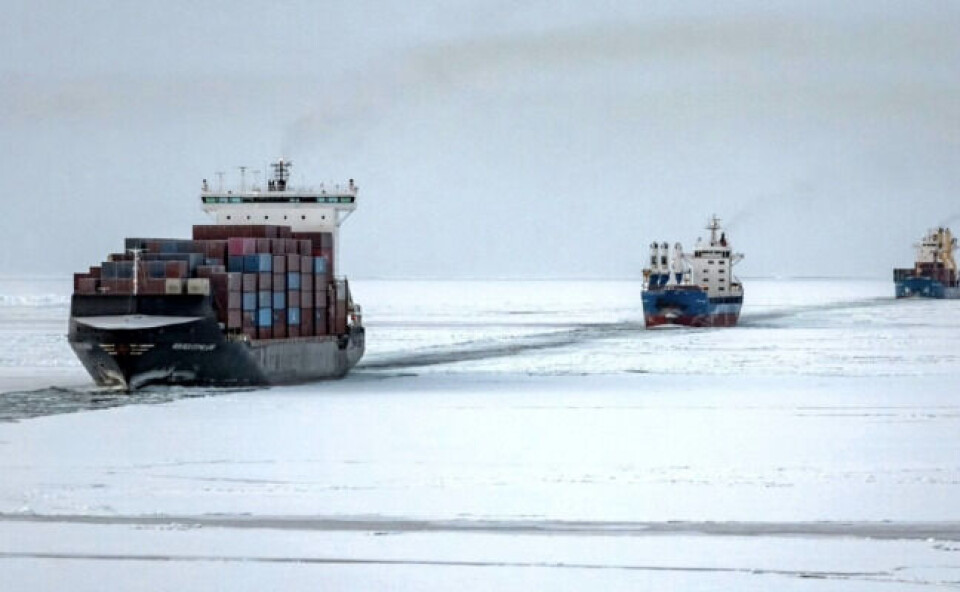
The welcome ceremony for the Northern Sea Route demonstration flight held at Busan North Port and the U.S. Naval Maritime Strategic Assets Repair, Maintenance, and Overhaul (MRO) cooperation are landmark events proving that the South Korean shipbuilding and shipping industry is evolving beyond simple manufacturing into a “core axis of global maritime security and logistics supply chains.”
To help general subscribers deeply understand the value of this achievement and widely share it, we have summarized and explained the core content and background knowledge in an easy-to-understand manner.
1. Northern Sea Route Trial Operation: A Maritime Revolution and Busan’s Leap Forward
The Northern Sea Route (NSR) is the shortest next-generation maritime route connecting Asia and Europe. Until now, most merchant ships have relied on a long detour passing through the Strait of Malacca in Southeast Asia, the Indian Ocean, and the Suez Canal.
- Revolutionary Shortcut like an Expressway on the Sea: Compared to the existing route through the Suez Canal (approx. 22,000 km), it shortens the navigation distance by 30% to 40% and reduces the voyage duration by more than 10 days. This is the key driver for massive fuel cost savings for shipping lines and a major overhaul of overall logistics costs.
- Strengthening Busan’s Position as the Maritime Capital: The relocation of the national carrier HMM’s headquarters to Busan, the confirmed establishment of a specialized Maritime Court, and the enhanced functions of the Ministry of Oceans and Fisheries combine to firmly establish Busan as the “starting point of the Northern Sea Route and East Asia’s premier hub port” beyond just being a domestic representative port.
- Geopolitical Risk Diversification and Eco-Friendly Benefits: Securing a safe alternative route instead of existing passages exposed to Middle East instability or piracy risks increases the resilience of global supply chains. Furthermore, the drastically reduced sailing distance significantly cuts greenhouse gas emissions from vessels, enabling active compliance with International Maritime Organization (IMO) environmental regulations.
2. Future Direction and Unrivaled Investment Value of K-Shipbuilding
As the Northern Sea Route expands, demand for specialized icebreaking/ice-capable vessels that can navigate through polar ice in sub-zero temperatures, along with eco-friendly energy carriers, will explode.
Three Core Pillars of K-Shipbuilding’s Leap
- 1. Polar Technology Integration
- Monopoly on Icebreaker / Ice-capable Vessel Tech
- 2. Eco-Friendly & High-Value Ships
- Market Leadership in LNG & Ammonia Large Carriers
- 3. Global Naval MRO Alliance
- Maintenance, Repair & Joint Building for the US Navy
① Monopoly Power in Polar Technology and High-Value Vessels
Ships operating in the Arctic Ocean require special steel alloys that withstand extreme cold below -40°C and advanced ice-strengthened hull design technology. Korea’s major shipbuilders—including HD Hyundai, Hanwha Ocean, and Samsung Heavy Industries—who possess world-class LNG carrier (LNGC) and special vessel construction capabilities, are expected to fully command this high-value market.
② Boosting the Value of the Eco-Friendly Ecosystem and Shipbuilding Equipment Value Chain
The government and private sectors are making massive investments in eco-friendly low-carbon fuel (LNG, ammonia, hydrogen, etc.) conversion technologies, AI-based sea ice prediction systems, and polar navigation workforce development. This acts as a powerful catalyst to elevate the corporate value across the entire Korean shipbuilding equipment and supply chain, including suppliers of eco-friendly engines, smart navigation systems, and high-performance equipment.
3. U.S. Naval Strategic Asset MRO Cooperation: Expanding the Defense Alliance
In responding to the rapid expansion of the Chinese Navy (increase in ship fleet size) in the Indo-Pacific region, the United States is facing maintenance capacity shortages and bottlenecks at its domestic shipyards. Consequently, the U.S.-Korea alliance is expanding beyond traditional military security into a “defense and shipbuilding ecosystem alliance,” centered on the U.S. Navy Ship MRO (Maintenance, Repair, and Overhaul) project.
- MSRA Execution and Actual Contract Awards: Major domestic shipbuilders acquired the Master Ship Repair Agreement (MSRA)—the qualification required for U.S. Navy ship maintenance—and have successfully secured and executed maintenance contracts for U.S. Navy logistics support vessels and key ships.
- On-Site Verification by U.S. Navy Leadership: Senior officials from the U.S. Department of the Navy and defense industry executives directly visited Korean shipyards such as Hanwha Ocean and HD Hyundai Heavy Industries, verifying their world-class construction speed and intelligent process technology while expressing deep trust.
4. Step-by-Step Roadmap Between Korea and the U.S.
Moving beyond short-term repair contracts with foreign shipyards, South Korea and the United States are steadily executing a medium-to-long-term roadmap to evolve into a “Joint Korea-U.S. Naval Defense Ecosystem.”
 Stage 1: Non-Combatant Ship MRO (Logistics support/transport repairs & trust building)
   │
   ▼
 Stage 2: Combatant Ship MRO & Modernization (Expanding repairs to Aegis destroyers)
   │
   ▼
 Stage 3: Acquisition/Investment in U.S. Shipyards & Joint Building (K-Shipbuilding integration)
- Phased Expansion of Target Vessels: Starting with repairs of non-combatant ships like logistics support vessels, the scope will gradually expand to include MRO and performance upgrades for core U.S. Navy combat ships, such as Aegis destroyers.
- Acquisition of U.S. Shipyards and Base Securing: Korean shipbuilders are acquiring or investing in strategic U.S. shipyards (e.g., Hanwha Ocean’s acquisition of the Philly Shipyard in the U.S.) to navigate local legal regulations like the Jones Act and actively pursue entry into the “U.S.-based joint construction” stage for U.S. Navy vessels.
- Transfer of Digital & Smart Shipbuilding Technologies: By integrating Korea’s industry-leading AI diagnostic maintenance technology, automated welding systems, and smart factory processes into the U.S. Navy shipbuilding network, the two nations will elevate their maritime security cooperation to the highest level.
💡 Comprehensive Recommendations
The successful trial operation of the Northern Sea Route from Busan Port and entry into the U.S. Navy MRO market signify a fundamental paradigm shift for Korea’s shipbuilding and shipping industry—from a “quantitative manufacturing industry focused on selling ships” to a “vital global partner responsible for commercial maritime logistics networks and international defense security.”
If public-private investments in eco-friendly polar technologies and Korea-U.S. defense supply chain cooperation proceed seamlessly, South Korea will firmly solidify its status as an irreplaceable, leading nation in the future global maritime economy.
