
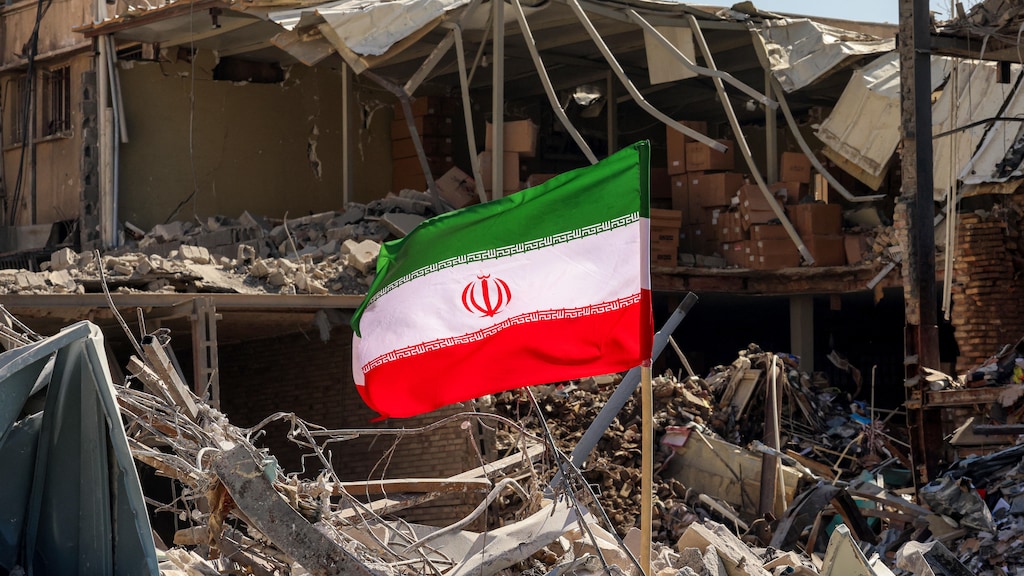
On the eve of the U.S. midterm elections on November 3, the Trump administration’s intense military pressure and hints of massive airstrikes against Iran, along with Iran’s “all-out retaliation targeting offshore U.S. assets,” are triggering a geopolitical chain reaction shaking not only the Middle East but also the Northeast Asian landscape.
This article provides an in-depth analysis from military strategy and political economy perspectives on the internal political and economic calculations behind the U.S. administration’s rhetoric regarding massive airstrikes in the Middle East, as well as scenarios involving China taking advantage of this timing to launch a surprise blockade of Taiwan and the authoritarian North Korea-China-Russia bloc executing a two-front offensive.
1. The Trump Administration’s Hidden Political and Economic Calculations
Considering the U.S. election landscape and the timing of Middle East military operations (the ongoing 2026 operations against Iran), the Trump administration’s strategy of mentioning high-intensity airstrikes while simultaneously pursuing negotiations contains three key strategic objectives.
[The Trump Administration’s 3 Key Political & Economic Calculations]
- Rally Voters for the Midterms ──► Build an image as a ‘strong security leader’ and secure justification for oil price stability.
- Target Iranian Nuclear & Drone Facilities ──► Achieve complete neutralization and irreversible measures against underground partitioned facilities (e.g., Pickaxe Mountain).
- Economic Containment of China ──► Target Iran’s crude oil supply chain to China to squeeze the financial lifeline of the Chinese economy.
- Political Leverage for Midterm Victory & Oil Price Control: Rather than initiating a large-scale, full-scale war right before the midterms (November 3), the administration continuously hints at a “massive post-election strike.” This demonstrates “strong military decisiveness” and an “America First security policy” to domestic voters.
- At the same time, this is used as a firewall to pressure Iran into lifting the blockade of the Strait of Hormuz, preventing voter defection caused by inflation from spiking oil prices.
- Military Objective: Complete Neutralization of Iranian Nuclear and Long-Range Drone Facilities: The intent is to launch joint U.S.-Israel strikes immediately after the election against suicide drone and enriched uranium facilities located inside underground granite bases recently revealed by Iran (such as Pickaxe Mountain), physically removing threats targeted at the U.S. mainland and overseas U.S. military bases.
- Economic Pressure: Economic Blockade of China by Disrupting Crude Oil Supply Chains: China is the primary destination for Iran’s oil exports. If the U.S. controls and strikes Iran’s energy hubs and crude oil distribution networks, the low-cost Iranian crude oil pipeline flowing into China will be cut off, maximizing the external energy cost burden on the Chinese economy.
2. Scenario: China’s Surprise Invasion and Blockade of Taiwan Triggered by U.S. Strikes in the Middle East
The moment U.S. assets, air defense, and aviation forces concentrate in the Middle East could be perceived by China as the “golden hour when U.S. asymmetric deterrence in the Asia-Pacific region is at its weakest.”
[Northeast Asia–Middle East Linked 3-Front Chain Reaction Scenario]
- [U.S.: Executes Massive Strikes on Iran] ──► Carrier and air defense resources shift heavily to Central Command (CENTCOM).
- [China: Launches Taiwan Blockade & Strikes] ──► Activates East China Sea low-Earth orbit (LEO) satellite electronic warfare (EW) jamming & maritime blockade.
- [North Korea: Immobilizes Forces on the Korean Peninsula] ──► Exposes 600mm rocket launchers & stealth drones at the front lines ➔ Pins down U.S. Forces Korea (USFK).
- China’s Space/Electronic Warfare (EW) Interruption and Surprise Blockade of the Taiwan Strait:
- While the U.S. focuses its military strength on the Middle Eastern front, China mobilizes low-Earth orbit constellation satellites and electronic warfare assets to execute widespread signal jamming against the satellite C4I (Command, Control, Communications, Computers, and Intelligence) and GPS networks of the U.S., South Korea, and Japan.
- Concurrently, China will attempt a surprise maritime and aerial blockade of the Taiwan Strait to neutralize immediate intervention by the U.S. 7th Fleet.
- North Korea’s Auxiliary Operation: ‘Fixing Force’ on the Korean Peninsula:
- North Korea simultaneously operates 122mm self-propelled artillery, 600mm super-large rocket launchers, and stealth suicide drones deployed in Hwanghae Province and frontline bases, exerting maximum threat against the Seoul Metropolitan Area and U.S. military bases in Osan and Pyeongtaek.
- This serves a textbook “feint in the east, strike in the west” strategy in Northeast Asia, forcibly locking U.S. Forces Korea (7th Air Force and 2nd Infantry Division) and South Korean assets to the defense lines of the Korean Peninsula so that not even 1% of their power can be diverted to the Taiwan Strait or the Middle East.
3. The U.S. Administration’s Strategic Architecture: Bypassing ‘Checkmate’ and Structural Confrontation
Even if China, North Korea, and Iran attempt a checkmate by exploiting the overload on multi-front U.S. military capabilities, the U.S. administration and its allies (South Korea, the U.S., Japan, and NATO) are formulating a counter-strategy to dismantle this through a “Regional Division of Labor.”
- South Korea’s Independent Deterrence Against North Korea: Even if U.S. forces are dispersed across the Middle East and Taiwan, the South Korean military will utilize its independent 3-Axis System (Kill Chain, KAMD, KMPR) and reconnaissance satellite network to preemptively neutralize North Korea’s long-range artillery and drone provocations, autonomously safeguarding the security line of the Korean Peninsula.
- U.S.-Japan Joint Bypass Blockade of the Taiwan Strait: The U.S. and Japan will activate the Japan Self-Defense Forces’ surface-to-ship missile network in the Southwestern Islands along with the U.S. Indo-Pacific Command’s distributed collective security network to physically block the Chinese navy’s expansion into the Pacific.
Summary & Key Points to Watch
The high-intensity military options foreshadowed against Iran immediately following the U.S. midterms stem from a complex set of calculations by the Trump administration: rallying domestic voters, securing security initiative in the Middle East, and severing China’s energy funding line.
To thwart attempts by China to blockade Taiwan and North Korea to immobilize forces on the Korean Peninsula during this vacuum, the key to preventing a catastrophic full-scale war lies in the South Korean military immediately deploying its independent missile defense network (KAMD) and capital region defense system—without relying solely on the U.S.—to completely contain North Korea’s asymmetric provocations directly on the ground.