
🌏 Northeast Asia’s New Cold War Framework and Japan’s Strategic Choice
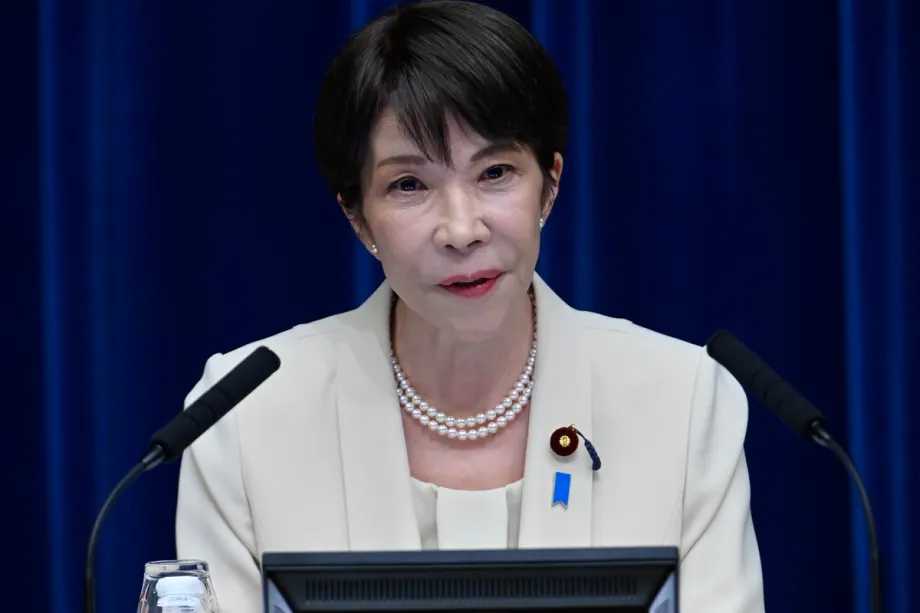
The cancellation of the summit between Chinese President Xi Jinping and Japanese Prime Minister Sanae Takaichi on the sidelines of the APEC Summit is far from a simple diplomatic glitch. It is a decisive sign revealing how rapidly the geopolitical landscape of Northeast Asia is shifting into a Cold War-style confrontation structure.
Currently, Japan is facing massive challenges both internally and externally. Externally, it confronts China’s threat of a Taiwan blockade and Russia’s militarization of the Kuril Islands (Northern Territories). Internally, it copes with domestic crises including recent major earthquakes threatening central Japan (Nagoya and Shizuoka) and the lingering risk of the mega-thrust Nankai Trough earthquake. Against the backdrop of these complex crises, this analysis breaks down the essence of the geopolitical and political messages conveyed by the Japanese government into accessible terms for general readers.
1. PM Takaichi’s Firm Stance: Japan’s 3 Core Geopolitical Messages
By turning down China’s behind-the-scenes proposal for compromise and accepting the cancellation of the diplomatic summit, the Japanese government sent three primary key messages toward China and Russia:
[Takaichi Government's 3 Hardline Messages to China and Russia]1. Taiwan Emergency = Crisis to Japan's Survival ──► Proclaiming Taiwan Strait peace as Japan's vital security baseline2. Zero Tolerance for Coercive Actions ─────────────► Demonstrating no compromise on Senkaku, undersea cables, & space jamming3. Value-Based Maritime Security Alignment ────────► Achieving tight alignment with US-Japan alliance & US-Japan-ROK defense network
- “A Crisis in Taiwan is a Matter of Japan’s Survival”The term “Survival-Threatening Situation” emphasized by Prime Minister Takaichi represents the highest legal concept under which Japan can exercise its right of collective self-defense to intervene militarily. If China blockades the Taiwan Strait, Japan’s primary sea lanes of communication (SLOC) for crude oil and vital resources would be completely severed. Therefore, from Japan’s perspective, defending Taiwan is not an abstract foreign conflict, but a direct issue of national economic survival.
- “No Compromise on Territorial, Satellite, and Cyber Infringements” This demonstrates a resolute intention not to gloss over ongoing tensions through conventional diplomatic rhetoric—ranging from Chinese coast guard intrusions near the Senkaku Islands (Diaoyu Islands in China) to Russia’s military buildup in the Kuril Islands, as well as the recent surge in Low Earth Orbit (LEO) satellite signal jamming (EW) and cyber operations.
- “Blocking Backroom Deals Between Great Powers” Regarding potential signs of informal rapprochement between the US, China, or Russia on the international stage, Japan delivered a clear warning: “Secret compromises between great powers that bypass Japan will not be tolerated.” This serves as a precise diplomatic maneuver to reconfirm the steadfastness of the US-Japan alliance.
2. Multi-Dimensional Pressure from China and Russia: The 3-Axis Strategy
Behind the decision of China and Russia to refuse dialogue with Japan and impose a cold diplomatic shoulder lies a sophisticated, multi-layered strategy designed to isolate Tokyo.
       [China & Russia's Multi-Layered Security Pressure Scheme]
[China: Taiwan Blockade & Diplomatic Bypassing] ──► Rejecting APEC bilateral summit ➔ Fostering division between pro-China/dovish factions in Japan
                       ▲
                       │ (Linked East Asian Two-Front War)
                       ▼
[Russia: Kuril Islands Base Militarization] ─────► Deploying missiles in Northern Territories ➔ Forcing dispersion of Japan's northern defense assets
- China’s Strategy of ‘Diplomatic Isolation and Divide-and-Rule’China singled out Japan among APEC participants by refusing a bilateral summit. Through this tactic, Beijing aims to frame Prime Minister Takaichi’s hardline stance as an approach that isolates Tokyo on the global stage, thereby fueling political and public division within Japan.
- Russia’s Activation of a ‘Northern Second Front’Even with its military forces stretched thin by the war in Ukraine, Russia has redeployed surface-to-ship missiles to the Kuril Islands. This acts as a tactical distraction designed to tie down Japan Self-Defense Forces (JSDF) units in the north, preventing them from concentrating their defense assets toward the Taiwan Strait or southern maritime routes.
- Exploiting Natural Disasters and Security VulnerabilitiesCapitalizing on periods when the Japanese government must dedicate administrative energy to disaster preparedness and recovery—such as following the Nagoya earthquake and ongoing Nankai Trough risks—China and Russia are applying simultaneous hybrid pressures (electronic jamming, cyber campaigns) to test Japan’s response capabilities.
3. Key Points to Watch: The Future of Japanese Diplomacy amid US-China-Russia Dynamics
[Scenario A: Strengthened US-Japan Security Alignment] ──► Countering Sino-Russian maritime expansion via US-Japan-ROK trilateral cooperation │[Scenario B: Resumption of US-China Dialogue] ──────────► Potential risk of Japan's diplomatic isolation if US and China reach a compromise
- Test of the US-Japan-ROK Trilateral Security AllianceThe sole pillar enabling Japan to maintain a firm stance despite Chinese cold shoulders is the robust US-Japan alliance paired with security cooperation with South Korea (integrated missile defense and air defense coordination). How resiliently this trilateral axis holds will be the paramount factor.
- Risks Stemming from Changes in US Political DynamicsShould a future US administration or Congress pivot toward dialogue or compromise with Beijing, Prime Minister Takaichi’s independent hardline policy could turn into a risk of diplomatic isolation. Conversely, it could also be re-evaluated as an indispensable anchor of deterrence against China. This balance will remain the most critical geopolitical variable in Northeast Asia.
💡 Summary & Conclusion
The failure to hold the China-Japan summit at APEC reflects a direct collision between the Takaichi administration’s “principled hardline policy” over the Taiwan Strait and Northeast Asian security leadership, and the “diplomatic isolation tactics” deployed by China and Russia.
Amid internal natural disaster risks (earthquakes) and external triple pressure from Beijing, Moscow, and Pyongyang, Japan continues to push back by maximizing defense alignment with the US-Japan alliance and value-sharing partner nations. This serves as a clear signal that the entirety of Northeast Asia has fully entered a Cold War-style bloc confrontation framework.