
The arsenic contamination crisis in the tributaries of the Mekong River goes far beyond simple environmental pollution; it is a severe issue intricately tied to residents’ right to life, transboundary environmental crime, and the corruption of Myanmar’s military regime.
To help general readers easily understand the situation, we have broken down the core issues into four main topics, followed by an in-depth look at the long-term ecological and health impacts.
1. Are There Ways to Sanction Myanmar’s Military Junta on the International Stage, Such as the UN?
In short, while regulatory and diplomatic pressure mechanisms exist, immediate coercive sanctions face significant practical limitations.
- Pressure via International Environmental Treaties and the UN Human Rights Council: The United Nations recognizes the “right to a clean, healthy, and sustainable environment” as a fundamental human right. The UN Human Rights Council (UNHRC) or the UN Environment Programme (UNEP) can push for official investigations and resolutions against the Myanmar junta for turning a blind eye to environmental destruction and heavy metal pollution that threaten the lives of neighboring citizens.
- Sanctioning Chinese Companies Through Supply Chain Due Diligence Laws: Rare earth elements illegally mined in Myanmar are mostly exported to China before entering global IT and green-tech supply chains. If Western nations tighten supply chain regulations to “ban the import of products using rare earths obtained through illegal mining and environmental destruction,” it could effectively curb mining demand itself.
- Practical Limitations: Strong economic sanctions or on-site inspections led by the UN Security Council are easily blocked due to potential vetoes from China and Russia. Consequently, practical cooperation—where Mekong River basin countries (Thailand, Laos, Cambodia) via the Mekong River Commission (MRC) join forces with the Chinese and Thai governments to enforce “mineral supply chain traceability”—is being discussed as a realistic alternative.
2. Can Annual Festivals Proceed Normally on the Polluted Mekong River?
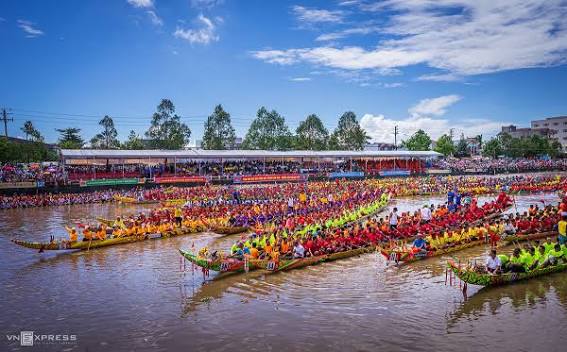
Major river-based cultural events, such as the annual Boat Racing Festival and Loi Krathong (Festival of Lights), take place across the Mekong River basin.
- Threats to Festival Operations: The detection of arsenic at 0.3 mg/L—more than 30 times the safety standard—in water treatment plants indicates a level dangerous even upon skin contact. Entering the river or splashing water during festivals could cause direct health hazards, including dermatitis and heavy metal poisoning.
- Conflict Between Local Economy and Public Health: While local governments in northern Thailand desperately need tourism revenue and are reluctant to cancel festivals, proceeding without safety measures could trigger a massive public health disaster. Unless water quality improves or strict safety zones are secured, scaling back festivals, restricting direct water entry, or postponing/canceling events will be unavoidable.
3. Is the Residents’ Drinking Water Issue Being Properly Resolved?
The Mae Sai water treatment plant temporarily suspended drinking water supplies before resuming them two days later. However, this is merely a stopgap measure, not a fundamental solution.
- Limitations of Water Filtration Facilities: Standard municipal water treatment plants rely on activated carbon or basic sedimentation methods, which cannot completely filter out sudden surges of high-concentration arsenic or heavy metals. Even if filtration facilities recover from temporary shutdowns, the risk of recurrence persists as long as upstream pollutants continue to flow in.
- Public Anxiety and Secondary Damage: As trust in tap water plummets, residents face heavy financial burdens from having to purchase bottled water. Furthermore, farmers and fishermen who rely directly on river water for agriculture and fishing face secondary damage from heavy metal contamination in crops and aquatic products.
4. The Stark Reality of High-Level Corruption and Solutions
🎭 The Mechanism of Corruption (Reality Check)
- A Financial Lifeline for Myanmar’s Junta: Cut off from international funding due to isolation and economic sanctions following the 2021 coup, Myanmar’s military regime collects massive bribes and taxes by overlooking illegal mineral mining.
- Cut-Rate Mining by Chinese Enterprises: As environmental regulations tightened within China, Chinese firms crossed into unregulated Myanmar borderlands, developing mines using low-cost, reckless chemical methods (such as in-situ leaching, which injects acidic solutions directly into the soil to extract rare earths).
- Collusion by Local Officials: Before the water treatment plant contamination came to light, border officials and smugglers likely shared profits along this illicit supply chain.
💡 Realistic Solutions
- Step 1: Establish a Cross-Border Water Quality Monitoring System (Thailand’s Request) As demanded by the Thai government, real-time water quality monitoring equipment must be installed in upstream areas of Myanmar, with data disclosed transparently.
- Step 2: Trace Supply Chains Through Cooperation with China As proposed by Thailand’s opposition party, the government must seek cooperation from China (including Premier Li Qiang)—the ultimate consumer of these rare earths—to block illegally mined minerals from entering China and sanction offending traders.
- Step 3: Empower Multilateral Mekong Environmental Bodies Mekong basin nations must move beyond non-binding recommendations and sign legally binding transboundary environmental treaties capable of holding upstream nations liable for damages or forcing mine closures when pollution occurs.
Long-Term Impacts of Heavy Metal Pollution on the Mekong Ecosystem and Public Health
Toxic heavy metals—including arsenic, mercury, and lead—along with acidic wastewater discharged from reckless rare earth mining in Myanmar’s Kachin and Shan states are flowing into the Mekong River system, devastating ecosystems and threatening public health.
The long-term impacts of these pollutants on the ecosystem and local residents can be categorized into three critical pathways:
1. “Biomagnification” Through the Food Chain and Ecosystem Collapse
- Disruption of Aquatic Ecosystems: Heavy metals such as arsenic and cadmium accumulate in river bottom sediments. When plankton and benthic organisms absorb these toxins, they move up the food chain into Mekong fish species (such as the Mekong giant catfish). As toxins move toward apex predators, concentrations escalate sharply—a process known as biomagnification.
- Depletion of Fishery Resources and Destruction of Spawning Grounds: Acidic mining solutions and toxic wastewater drastically lower river pH levels and reduce dissolved oxygen. Consequently, fish eggs and fry fail to develop properly and suffer mass mortality, depleting biodiversity in the Mekong River, Southeast Asia’s largest freshwater fishery resource.
2. Threatening the “Kitchen of the World” Through Crop Contamination
- Soil and Agricultural Water Pollution: When contaminated water from tributaries (such as the Sai and Kok rivers) is drawn for irrigation, arsenic and heavy metals penetrate the roots of rice, vegetables, and fruits.
- Food Security and Economic Blow: Northern Thailand and the lower Mekong basin serve as major global food-exporting hubs. If residual heavy metals are detected in crops irrigated with arsenic-laden water, agricultural exports will be halted, dealing a severe, long-term blow to the livelihoods of border-region farmers.
3. Chronic Heavy Metal Poisoning in Local Populations
Continuous consumption of arsenic-contaminated drinking water, seafood, or crops can lead to severe chronic illnesses:
- Chronic Arsenicosis:
- Skin Disorders: Begins with skin pigmentation and hyperkeratosis (thickening and cracking of the palms and soles), which can progress into skin ulcers.
- Increased Cancer Risk: Arsenic is classified as a Group 1 carcinogen by the International Agency for Research on Cancer (IARC). Long-term exposure dramatically increases the incidence of bladder, lung, skin, and liver cancers.
- Neurological and Cardiovascular Damage: Triggers peripheral neuropathy (numbness and pain in extremities), hypertension, and peripheral vascular diseases (such as Blackfoot disease).
- Fatal Impacts on Vulnerable Groups (Pregnant Women and Children):
- Childhood Developmental Disorders: Heavy metals attack the central nervous system, causing impaired cognitive development, learning disabilities, and behavioral disorders in children.
- Maternal and Fetal Harm: Arsenic and lead can cross the placental barrier, leading to miscarriages, premature births, and congenital disabilities—creating a generational public health crisis.
💡 Summary and Urgent Tasks
Rare earth mining wastewater is not a temporary pollutant that simply washes away; it causes a long-term environmental catastrophe by remaining in riverbed sediments and soil for decades, continuously releasing toxins.
Without urgent enforcement of environmental regulations on upstream mines and crackdowns on illegal supply chains—going beyond mere water quality monitoring—the lives and health rights of tens of millions of residents across the Mekong River basin will remain under constant threat.