
The First Year of Industrial Commercialization: Market Landscape (2026)
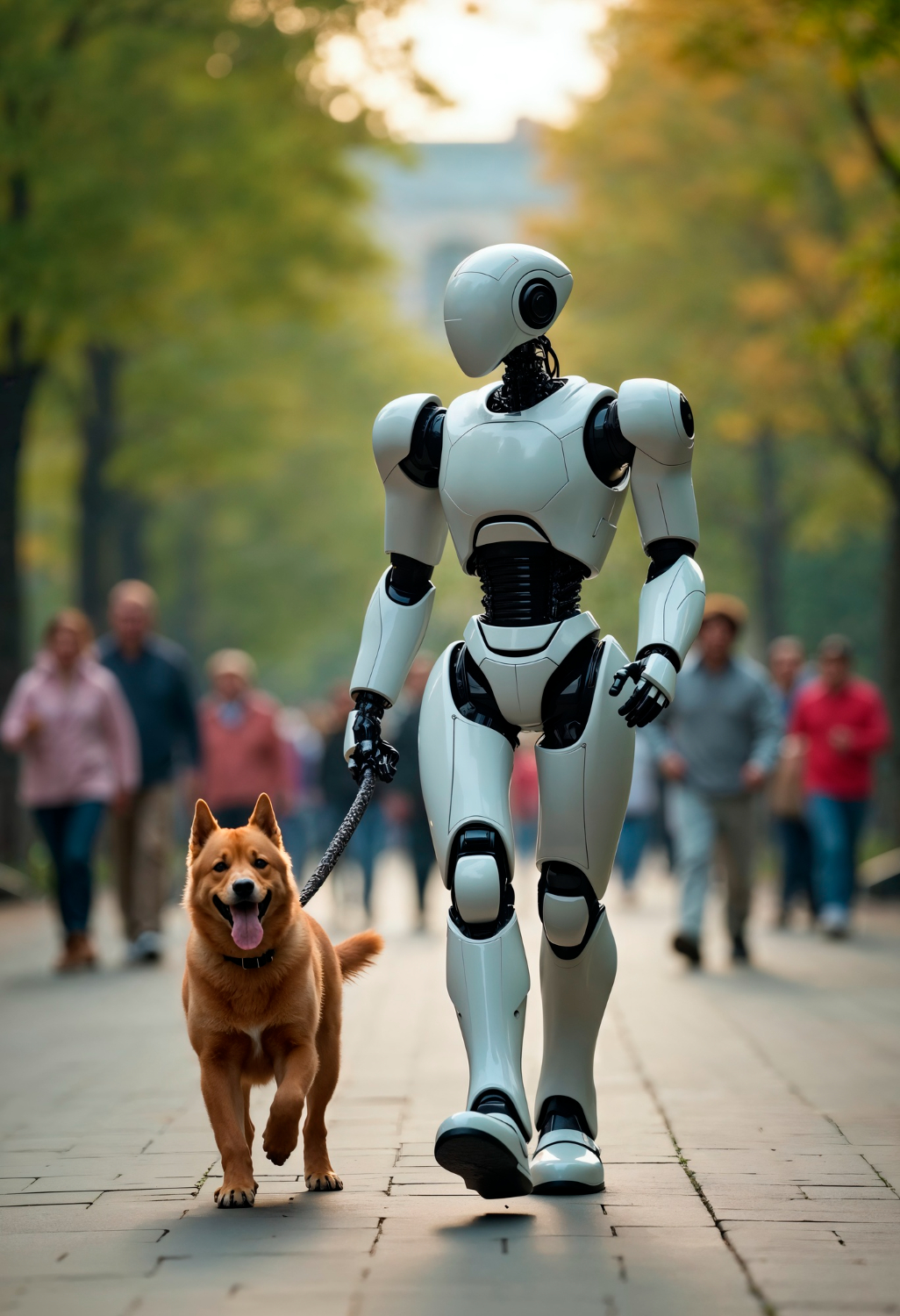
As of May 2026, the humanoid robot industry has officially transitioned from the “demonstration phase” to the “First Year of Industrial Commercialization.” The market is no longer defined by research prototypes but by Minimum Performance Platforms (MPPs) that prioritize Return on Investment (ROI) and task-specific reliability.
Below is a strategic presentation-style analysis of the market’s current landscape.
📋 Slide 1: 2026 Market Outlook — From Vision to Reality
The global humanoid robot market is valued at approximately $6.3 billion in 2026, with a projected compound annual growth rate (CAGR) of nearly 50% through 2033.
- The “Commercial Pivot”: 2026 marks the rise of VLA (Vision-Language-Action) models, which are now integrated into roughly 40% of new deployments. These allow robots to follow natural language instructions without traditional hard-coding.
- Regional Dominance: North America and Asia-Pacific lead the market. North America commands a 42.2% share (led by Tesla and Figure), while Asia-Pacific (led by China and South Korea) dominates in manufacturing and component supply chains.
⚔️ Slide 2: Competitive Landscape — The “Big Four” Groups
The industry has bifurcated into high-end performance leaders and aggressive price disruptors.
| Leader Group | Key Player | Primary Model | Strategic Focus | Manufacturing Scale |
|---|---|---|---|---|
| Agility / Mobility | Tesla | Optimus Gen 2 | Vertical integration; targeting $25,000–$30,000 price point at scale. | Industrial Pilot |
| Agility / Mobility | Figure AI | Figure 02 / 03 | Advanced reasoning; major pilots with BMW ($39B valuation). | Industrial Pilot |
| Agility / Mobility | Boston Dynamics | Electric Atlas | Extreme mobility and strength; backed by Hyundai’s manufacturing. | Industrial Pilot |
| Price Disruptor | Unitree | G1 | Pricing at $13,500, using off-the-shelf parts to lower entry barriers. | Mass Production |
🏭 Slide 3: Deployment Trends — The “Three L’s”
Early adoption in 2026 is concentrated in sectors where labor shortages are most acute and tasks are highly repetitive.
- Logistics: Agility Robotics (Digit) and Apptronik (Apollo) have secured contracts for hundreds of units in warehouses (e.g., GXO, Amazon, Mercedes-Benz) specifically for “tote-moving” and material handling.
- Automotive: This is the primary proving ground. BYD-UBTECH has the world’s largest commercial deployment (approx. 200 units), while Hyundai is opening its Robot Metaplant Application Center (RMAC) for mass Atlas deployment.
- Labor-Shortage Sectors: Caregiving and Personal Assistance are estimated to capture a 36% share of the humanoid market in 2026, driven by aging populations in Japan, South Korea, and Europe.
💻 Slide 4: Semiconductor Hardware — The “Humanoid Brain”
The 2026 humanoid requires a dual-track architecture to manage both high-level reasoning and millisecond-level motor control.
1. The Computing Stack (On-Device AI)
- Main SoC: Multi-core ARM/RISC-V CPUs paired with powerful NPUs (Neural Processing Units) for Transformer-based vision models.
- Memory: High-speed LPDDR5X (with >80 GB/s bandwidth) is now standard to handle the real-time processing of multimodal inputs.
2. The Nervous System (Real-time Control)
- MCUs: Specialized industrial SoCs (Cortex-R series) manage 1–4 kHz force control loops, ensuring the robot can respond to physical perturbations instantly.
- Korean Innovation: The Yongin Semiconductor Cluster has become a critical hub for these specialized chips, with Samsung and DEEPX providing ultra-low-power NPU architectures optimized for 11th-generation actuators.
🇰🇷 Slide 5: South Korean Strategic Position
South Korea is moving from a hardware adopter to a foundational power in “Physical AI.”
- Samsung Electronics: Has begun pilot production lines integrating humanoids within its U.S. and Korean plants in 2026. Samsung’s true focus is the “Factory where robots work,” leveraging its foundry for AI chips (4nm Groq3 LPUs) and all-solid-state batteries for robots via Samsung SDI.
- Hyundai / Boston Dynamics: Leading the charge in “fenceless” safety. The Electric Atlas is being positioned as a heavy-duty laborer capable of 15–20kg payloads—the “OSHA sweet spot” for industrial integration.
- Rainbow Robotics: Now 35% owned by Samsung, it serves as the core platform for Samsung’s “Agentic AI” factory transformation.
💰 Slide 6: Commercialization Tiers & Pricing
Business models are shifting from high-CAPEX purchases to RaaS (Robot-as-a-Service).
- Entry-Level ($13k–$30k): Unitree G1, Tesla Optimus (target). Mostly for research and simple tasks.
- Enterprise-Grade ($100k–$250k): Boston Dynamics, Figure, Agility. Designed for multi-shift industrial uptime.
- Leasing Models: Corporate customers now prefer monthly leases ranging from $3,500 to $8,000, which include maintenance and software updates, making robot labor an operational expense (OpEx).
💡 Expert Summary
The defining trend for the remainder of 2026 is “Imitation Learning.” Robots are now learning complex tasks in hours by watching human teleoperation or video data. For investors and industrial players, the focus has shifted from whether a robot can walk to how fast it can learn a new station on the assembly line.
Humanoid Robots Factory War 2026: Optimus vs Unitree, BMW & The OSHA Sweet Spot
This video provides an in-depth breakdown of the intense competition between major humanoid manufacturers and how automotive giants like BMW are scaling these robots in real production environments.