
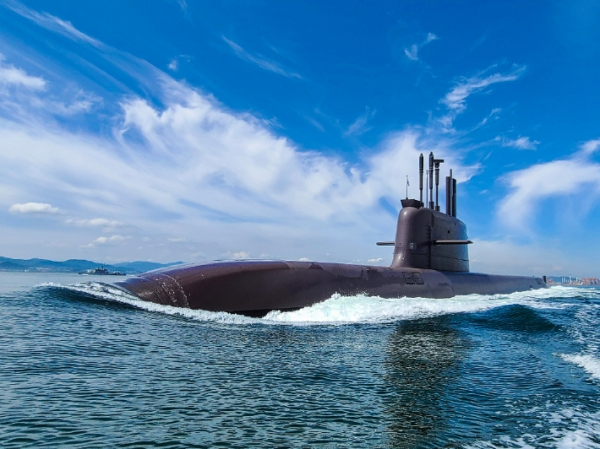
As Canada’s Canadian Patrol Submarine Project (CPSP) is a mega-project with a total budget of up to KRW 60 trillion ($44 billion USD), the core focus from an investor’s perspective is analyzing how each country’s bidding strategy targets the two key pillars of the Canadian government: “pragmatic national interest” and “geopolitical alliance.”
Below is a breakdown of the scenario analysis and optimization factors from an investor’s perspective.
Investor’s Scenario Analysis: Canada’s Win Conditions
The recent moves by the Canadian government (under the Mark Carney administration) can be summarized as a “Middle Power Coalition,” “Securing Arctic Security,” and “Domestic Job Creation (Infrastructure Investment).” Here is an analysis of how the lobbying and partnership strategies of South Korea and Germany align with these conditions.
Scenario A: Germany (TKMS) + Australia (PMB) Alliance Strategy
- Canada’s Alignment Conditions: Strengthening Five Eyes solidarity and establishing domestic production infrastructure.
- Geopolitical Justification (Advantage): Canada has recently maximized defense cooperation with Australia by signing a KRW 2.7 trillion ($2 billion USD) Over-the-Horizon (OTH) radar contract. TKMS’s selection of Australia’s PMB Defence as its partner is a highly calculated political move to “piggyback” on the honeymoon relationship between Canada and Australia. This strategy is sufficient to appeal to the blood-alliance ties of the “Five Eyes.”
- Economic Pragmatism (Localization): TKMS has committed that if it wins the contract, PMB will build battery production facilities and an R&D center locally in Canada. This strategy directly addresses the Canadian government’s desire for job creation and technology transfer.
- Investor’s Checkpoint: If Germany’s strategy succeeds, companies related to the Australian battery supply chain and Canadian local infrastructure construction stocks are likely to benefit.
Scenario B: South Korea (Hanwha Ocean / HD Hyundai Heavy Industries) Technology & Delivery Strategy
- Canada’s Alignment Conditions: Proven lithium-ion battery technology, superior cost-effectiveness, and strict adherence to delivery deadlines.
- Technical Superiority (Lithium-ion Battery): The greatest strength of South Korean submarines (tentative model based on the KSS-III class) is their world-class lithium-ion battery system and diesel hybrid propulsion system. The very reason Germany hurriedly brought in an Australian company is that they felt threatened by South Korea’s battery technology. Compared to European defense firms, which often suffer from frequent delivery delays, South Korea stands out as a unique “shipbuilding powerhouse” capable of delivering high-quality submarines strictly on time, aligning perfectly with Canada’s urgent need to replace its aging fleet.
- Weakness Mitigation (Lobbying Direction): To gain a competitive edge, South Korea must aggressively announce partnerships with local Canadian shipyards (such as Davie Shipbuilding) and North American battery supply chains, similar to Germany’s approach. Furthermore, lobbying efforts should focus on proving South Korea’s “Arctic operational capabilities,” including ice-navigation and long-term submergence capacity.
- Investor’s Checkpoint: If the likelihood of K-defense winning the contract increases, strong stock momentum will be driven by Hanwha Ocean, HD Hyundai Heavy Industries, as well as major domestic battery stocks and defense component manufacturers that supply lithium-ion batteries for submarines.
Leave a Reply