
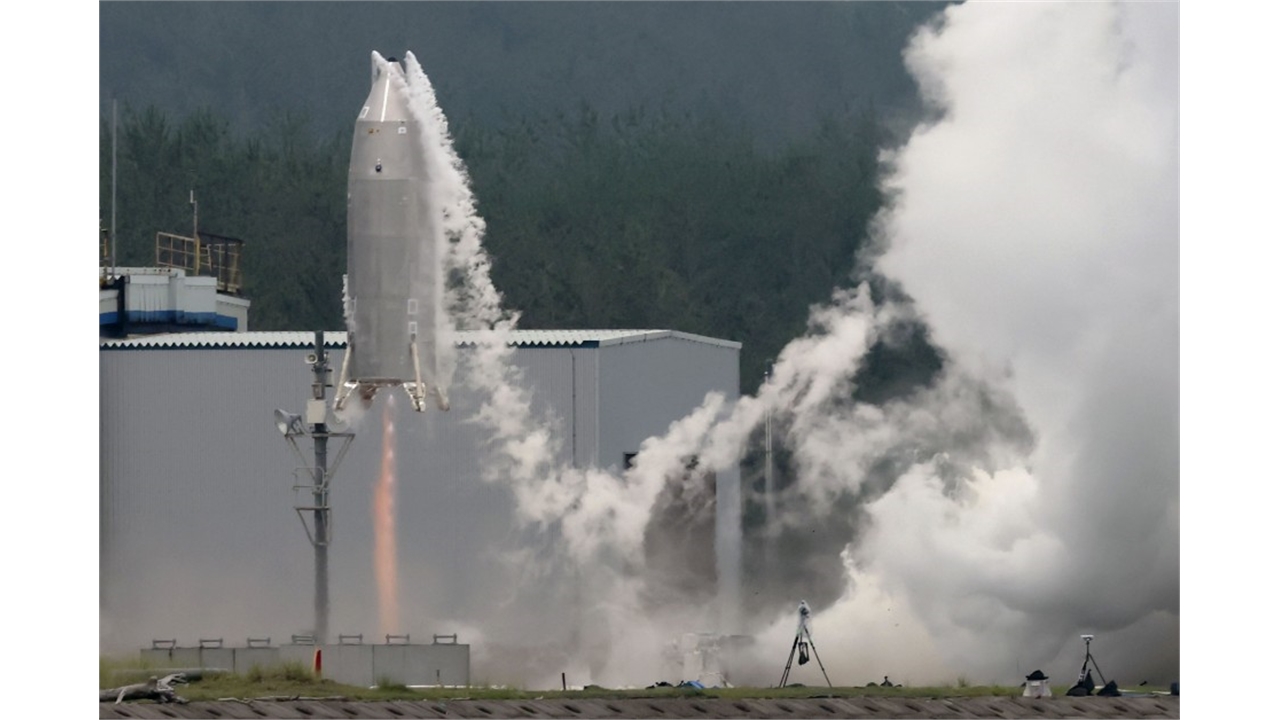
JAXA’s RV-X and SpaceX’s Disruption: A Macro Investor’s Guide to the Reusable Rocket Era and Next-Gen Propulsion
The news of the Japan Aerospace Exploration Agency (JAXA) successfully completing a 40-second autonomous flight, horizontal maneuver, and safe landing of its small Vertical Takeoff and Landing (VTOL) experimental vehicle, “RV-X,” provides massive macro inspiration to the global space market. This major validation news signals Japan’s official entry into the Reusable Launch Vehicle (RLV) ecosystem—a domain long monopolized by America’s SpaceX—armed with its proprietary advanced guidance control and lightweight structural mix, cementing its commercialization roadmap for 2030.
This piece provides a multi-dimensional investor perspective on SpaceX’s overwhelming cost-reduction effects, which completely shifted the space development paradigm from consumable assets to “reusable assets.” Furthermore, it delivers a reality check on “room-temperature anti-gravity and next-generation propulsion R&D,” a hot potato recently buzzing across capital markets and scientific communities.
1. The Disruptive Cost Reduction of Rocket Reusability Proven by SpaceX
The reason the global capital market assigns a massive market capitalization of over $2 trillion to SpaceX, and why global space agencies, including JAXA, are betting their futures on RLV development, boils down to a “90% cost destruction.”
- Convergence of Marginal Cost per Launch: Traditional expendable rockets (such as the legacy Space Shuttle or Ariane 5) cost approximately $9,000 to $10,000 to send 1 kg of payload into Low Earth Orbit (LEO). In contrast, the Falcon 9, which reuses its first-stage booster dozens of times (with the B1067 booster surpassing 36 flights), has slashed this cost to the $2,700 range. While manufacturing a new booster costs around $30 million, the internal cost of refurbishing a recovered booster is less than $300,000. This structure allows profit margins to scale upward exponentially the more a booster is flown.
- The Tipping Point of the Fully Reusable ‘Starship’: Once Starship—designed to rapidly reuse both its first and second stages within hours—perfectly establishes orbital operations, the transport cost per kg to LEO is projected to plummet to $100–$200. This is comparable to terrestrial logistics costs, acting as a powerful catalyst that 100% guarantees the economic viability of space data centers and lunar resource mining.

2. The Boundary Between Science and Business: The Current State of Room-Temperature “Anti-Gravity” R&D
To slash space transport costs, public interest and rumors have flared regarding “anti-gravity” technologies that control physical mass itself beyond conventional rocket propellants (e.g., fake news regarding a temporary loss of Earth’s gravity in August 2026). However, the perspective of institutional capital markets and orthodox science remains cold and clear:
“Under modern physics protocols (General Relativity and particle physics), pure ‘anti-gravity technology’ that artificially defies or cancels out natural environmental gravity does not exist, nor is it anywhere near commercialization.”
Nevertheless, actionable signals for real next-generation alternative propulsion research—which investors must focus on after filtering out the noise—are rapidly taking shape.
- Rotating Detonation Engine (RDE): A next-generation hardware technology that triggers continuous, hyper-compressed explosions to boost fuel efficiency by over 20% to 30% compared to conventional rockets. It is rapidly entering the commercialization track within a pure tech domain free of regulatory risks.
- Lithium-Plasma and Ion Propulsion Systems: As seen in the “Linc” spacecraft that recently rescued NASA’s Swift telescope, these systems generate thrust by accelerating ionized particles through electromagnetic fields. Rather than being used to break through Earth’s gravity, they have become the standard infrastructure for ultra-long-distance, low-cost travel in deep space and lunar orbits.
3. Mid-to-Long-Term Core Value Stocks for Investors to Preempt
The intersection of JAXA’s success and SpaceX’s cost-destruction trend marks a decisive golden time for global long-only funds to rotate capital into South Korea’s hyper-gap space supply chain, which possesses reliable manufacturing execution and component competitiveness.
① The Absolute Leader in Korean Reusable Rocket and Engine Tech: Hanwha Aerospace
- Investment Mechanism: The primary contractor for the Nuri (KSLV-II) advancement project and a core partner in developing next-generation launch vehicles. As demonstrated by JAXA’s RV-X success, structural lightweighting and combustion control technologies are vital national security assets.
- Mid-to-Long-Term Value: Monopolizing Korea’s independent launch vehicle infrastructure, it locks in 100% of hardware supply once the domestic reusable rocket roadmap activates, making it the irreplaceable anchor mega-cap stock in the domestic aerospace sector.
② Satellite Ion Propulsion & Space Security Network Partners: LIG Nex1, Hanwha Systems
- Investment Mechanism: Practical “ion propulsion and satellite control software/hardware” value stocks that replace the fantasy of anti-gravity technology.
- Mid-to-Long-Term Value: Low Earth Orbit (LEO) constellation satellite communication antenna infrastructure (Hanwha Systems) and precision guidance control, alongside drone/satellite security solutions (LIG Nex1), are the most certain co-beneficiaries of the global space economy’s margin re-rating.
💡 Investor Takeaways: Navigating the Space Macroeconomy
| Market Story & Illusion (Noise) | Physical Laws of the Real Capital Market (Signal) | Value Investor Positioning Strategy |
| “Investing in startups claiming mystical anti-gravity tech will yield jackpot returns?” | Exotic gravity claims lacking physical evidence are merely storytelling to attract funding, completely devoid of an earnings baseline. | Decisively reduce portfolio weight in highly volatile theme stocks lacking verified tech demonstration pathways. |
| “Rocket launches are a one-off event business lacking continuity?” | The Reusability Revolution: Dozens of reuses of the Falcon 9 have crashed launch costs by 90%, transforming it into a high-margin industry logging trillions of won in commercial satellite revenue monthly. | Aggressively buy Korea’s hyper-gap aerospace leaders, which will serve as the core engines for the global space rearmament cycle and LEO infrastructure buildout. |
📌 Final Macro Conclusion
The success of Japan JAXA’s RV-X and SpaceX breaking its own Falcon 9 reusability records signify that the space industry has entered a strict phase of hardware productivity and cost-cutting competition—a race of “who can reach orbit cheaper and faster.”
Global asset management firms are not distracted by the noise of baseless anti-gravity themes. Instead, they are synchronizing capital to preempt the LEO satellite ecosystem, set to explode amid collapsing launch costs, and the hyper-gap Korean space machinery and engine value chains supporting it. Smart investors should not be fooled by short-term market volatility into panic-selling precious shares. Instead, they should build a portfolio anchored around Korea’s top-tier aerospace blue chips and high-precision control value stocks to maximize upcoming long-term capital gains.
SpaceX Falcon 9 Reusability & Cost Collapse Analysis
This video features a detailed look into how SpaceX achieved a near 90% launch cost destruction through Falcon 9 booster reusability, alongside a scientific fact-check on the recent social media rumors regarding Earth’s loss of gravity, aiding a multi-dimensional understanding of this text.