
Baltic State Lithuania Pushes to Repeal Constitutional Clause Barring Nuclear Weapons: Escalating Geopolitical Tensions and Strategic Countermeasures
Lithuania, one of the three Baltic states bordering Russia, is actively pursuing the repeal of Article 137 of its constitution, which explicitly prohibits the deployment of weapons of mass destruction and foreign military bases on its national territory. According to local media reports, Juozas Olekas, Speaker of the Lithuanian Parliament, stated that extending the autumn legislative session may be necessary to pass the constitutional amendment. Initiated by 50 members of parliament last July, the bill to abolish Article 137 is expected to be finalized before the end of this winter.
Speaker Olekas pointed out that the current constitutional clause no longer aligns with rapidly evolving geopolitical realities and makes Lithuania “a noticeably distinct outlier within NATO.” He emphasized that “the state’s highest priority is the preservation of peace, the key to which is securing effective deterrence—and nuclear weapons are the most powerful deterrent available.” This constitutional pivot mirrors actions taken by Finland, which shares a border of over 1,300 kilometers with Russia and passed legislation last June to remove its own nuclear ban, signaling a fundamental realignment of defense postures across Northern and Eastern Europe.

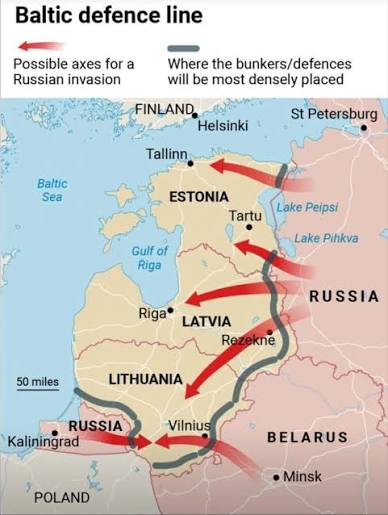
However, these legislative moves triggered an immediate and severe warning from the Kremlin. In a televised interview, Russian Presidential Spokesperson Dmitry Peskov strongly condemned the initiative, stating that “the deployment of nuclear weapons is always targeted at someone, and naturally, this will be aimed at us in the East, not at the West.” He warned that “this will inevitably lead to a serious escalation of tensions.” Peskov further issued an explicit nuclear threat, declaring, “If any country hosts nuclear weapons aimed at us on its territory, that territory will automatically be placed directly within the targeting sights of our own nuclear forces.” Given Lithuania’s precarious location sandwiched between Russia’s Kaliningrad exclave and its key ally Belarus, this rhetoric has heightened structural concerns among international observers and global financial markets.
1. Structural Alternatives for National Stability Amid UN Security Council Gridlock
With the United Nations Security Council effectively paralyzed due to the frequent abuse of veto power by permanent members—most notably Russia—relying strictly on traditional universal multilateralism poses severe risks to national security. To preserve peace and sustain economic growth under constant territorial expansionism and nuclear posturing, nations are adopting several critical short- and medium-term countermeasures:
- Expanding Minilateral Alliances and Values-Based Coalitions:Beyond the broader NATO collective defense mechanism, highly cohesive minilateral defense agreements serve as agile frameworks for real-world deterrence. Networks like the UK-led Joint Expeditionary Force (JEF) or Nordic-Baltic defense pacts enable rapid military deployment and joint operational readiness unhindered by bureaucratic inertia or diplomatic blockades within larger international bodies.
- Building Asymmetric Deterrence via Economic and Technological Blocs:Modern deterrence encompasses far more than conventional weaponry. Strategic dominance in semiconductors, artificial intelligence, next-generation energy infrastructure, and critical raw materials acts as a powerful non-kinetic shield. Establishing strict export controls and accelerating supply chain friend-shoring raises the economic isolation cost of potential aggression to prohibitive levels, creating a vital line of defense.
- Leveraging UN General Assembly Mechanisms and Soft Deterrence:In response to Security Council gridlock, coalition states actively utilize mechanisms such as UN General Assembly Resolution 76/262—which automatically convenes the General Assembly whenever a veto is cast. Mobilizing overwhelming international consensus enforces diplomatic isolation and applies sustained normative pressure on aggressor nations.
2. Investor Action Plan: Navigating Geopolitical Risk in an Era of Armed Peace
Investors must recognize the structural end of the post-Cold War “Peace Dividend” and adapt to an era defined by “Armed Peace.” Rather than reacting emotionally to geopolitical escalation headlines, market participants should strategically realign their investment frameworks to track shifting sovereign capital flows.
| Investment Horizon | Short-Term Focus (6–12 Months) | Mid-to-Long-Term Focus (1–3+ Years) |
| Key Catalysts | · Localized military friction around the Suwalki Gap and Kaliningrad · Weaponization of energy/commodities & additional Western sanctions · Speed of Article 137 repeal and NATO asset forward deployment | · Realization of NATO defense spending targets (2%–3%+ of GDP) · Comprehensive structural transition toward supply chain friend-shoring · Institutionalization of nuclear deterrence blocs across Eastern Europe |
| Asset Allocation Strategy | [Overweight] Defense contractors, safe-haven assets (Gold/USD), cybersecurity [Caution] European consumer discretions, energy-sensitive manufacturing | [Overweight] Autonomous defense systems/AI, Small Modular Reactors (SMRs), LNG infrastructure, critical mineral miners |
| Risk Factors to Monitor | Short-term market volatility driven by geopolitical escalation headlines and commodity price spikes | Long-term structural inflation resulting from supply chain duplication and elevated sovereign risk premiums |