
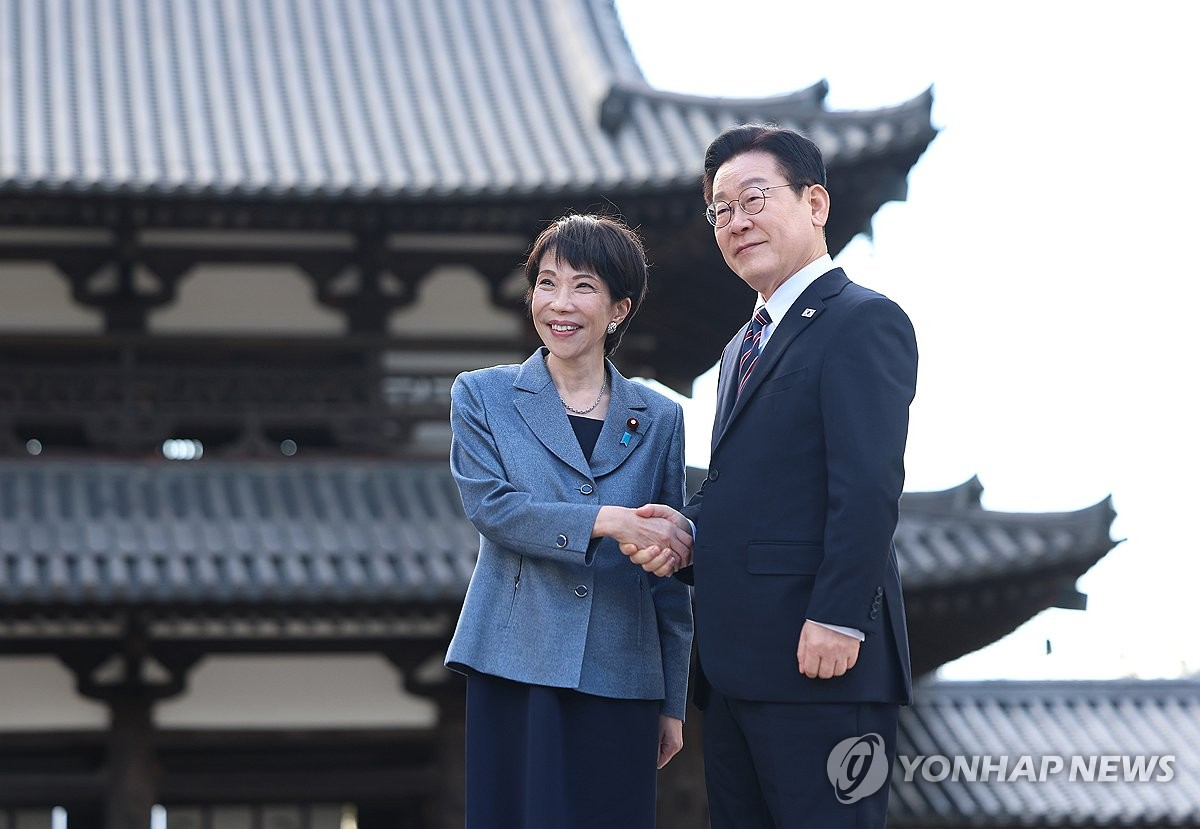
Analysis of the Impact on the Stock Market (KOSPI, KOSDAQ)
The news of the “Andong Korea-Japan Summit Scheduled for May 19,” suddenly announced by the Blue House on May 15, is expected to serve as a crucial security and economic buffer for the South Korean economy and stock market, which are currently facing peak global geopolitical uncertainties (the breakdown-style conclusion of the U.S.-China summit, the paralysis of the Strait of Hormuz, and the British Prime Minister’s resignation crisis).
Here is an in-depth analysis of how this third summit (mutual hometown visits) between President Lee and Japanese Prime Minister Sanae Takaichi will affect the bilateral trade balance and the domestic stock market (KOSPI/KOSDAQ).
1. 🤝 Impact on the Korea-Japan Trade Balance: “Supply Chain Bloc-ification and the Silicon Shield”
Moving beyond a simple promotion of friendship, this summit will focus heavily on the core agenda of “upgrading the supply chain alliance for survival.”
- Stabilizing the Semiconductor Material, Component, and Equipment (MCE) Supply Chain: As the U.S.-China summit concluded without a final joint statement, risks in the Taiwan Strait have reached their peak. Consequently, both nations are highly likely to derive an agreement to strengthen alternative channels for MCE and foundries between South Korea and Japan to prevent a collapse of the semiconductor supply chain. While this may temporarily expand South Korea’s trade deficit with Japan in the short term, it represents a “survival-driven import” that lowers the risk of raw material depletion on South Korean semiconductor production lines.
- Stabilizing the Trade Environment: Amid the historic weakness of the Japanese Yen, South Korean exporting companies have faced pressures on their trade balance while competing with Japanese products in global markets. If measures to ease tariff barriers or resolve trade frictions are discussed during the summit, it could positively contribute to the diversification of exports to Japan and improve the trade balance over the medium to long term.
2. 📈 Impact on the Domestic Stock Market: “Calming Panic Selling and Securing a Bottom Support Floor”
In a panic-stricken market where the KOSPI recently collapsed to an intraday low of 7,371—shattering the optimism surrounding a “KOSPI 8,000” run—this Korea-Japan summit will be perceived by foreign investors as a “powerful security and economic guardrail for Northeast Asia.”
① A Signaling Effect to Calm Foreign Panic Selling
The primary reason foreign investors offloaded South Korean equities was “Northeast Asian security instability” triggered by the U.S.-China breakdown and Taiwan risks. The mere fact that the leaders of South Korea and Japan are meeting to declare a “joint response to Middle Eastern geopolitical shifts and regional issues (Taiwan and North Korea risks)” sends a clear signal to international hedge funds that the Northeast Asian system remains stable, serving as a support pillar to halt foreign selling.
② Exchange Rate Stabilization via Joint Energy and Logistics Responses
Japan is also suffering from soaring oil prices caused by the paralysis of the Strait of Hormuz. If concrete measures such as a Korea-Japan joint crude oil/gas reserves swap or a joint maritime logistics protection framework take shape during this summit, it will serve as a catalyst to calm the USD/KRW exchange rate, which has been skyrocketing due to oil anxieties. Once the exchange rate stabilizes, foreign anxieties over FX losses disappear, allowing capital to flow back into the stock market via short-covering.
③ Expected Beneficiary Themes and Sectors
- Semiconductors & Shipbuilding/Shipping: Momentum driven by the mitigation of supply chain anxieties and joint responses to maritime logistics.
- Nuclear Power & Eco-Friendly (Hydrogen) Energy: Potential for a concrete Korea-Japan energy alliance aimed at breaking through the energy crisis.
- Andong Regional Economy, Tourism, & Consumer Goods: Expectations for a revival of human exchange between Korea and Japan surrounding Prime Minister Takaichi’s itinerary (such as visiting the Andong Hahoe Folk Village), bringing warmth into travel, entertainment, and casino sectors.
3. 📊 Summary and Investment Strategy Advice
| Category | Core Watch Points | Stock Market & Economic Effects |
|---|---|---|
| Trade Balance | Semiconductor MCE supply chain assurances and trade cooperation. | A short-term increase in imports is unavoidable, but removing production uncertainties establishes a medium-to-long-term foundation for surpluses. |
| Domestic Stock Market | Mitigation of Northeast Asian security risks and exchange rate stabilization effects. | Solidifying the KOSPI bottom support floor at the 7,300–7,400 range and paving the way for a technical rebound. |
💡 Opinion:
Amid the collision between the U.S. and China and the political collapse in Europe (the UK), the fact that South Korea and Japan are demonstrating top-tier, tight shuttle diplomacy via “mutual hometown visits” delivers a highly refreshing shock to global capital markets. This is because it takes the form of building a joint front between Korea and Japan against pressure from Trump.
If the joint press statement to be released during the May 19 summit contains concrete language regarding “supply chain cooperation” and “securing energy trade routes,” the collapsed KOSPI will gain a powerful ally to directly confront the Samsung Electronics strike risk scheduled for May 21. For the time being, it is worthwhile to maintain a conservative yet positive outlook, centering on sectors that reflect summit expectations.
Leave a Reply