
Blockade Analysis 2026: Shipping Gridlock and Outlook for Free Navigation
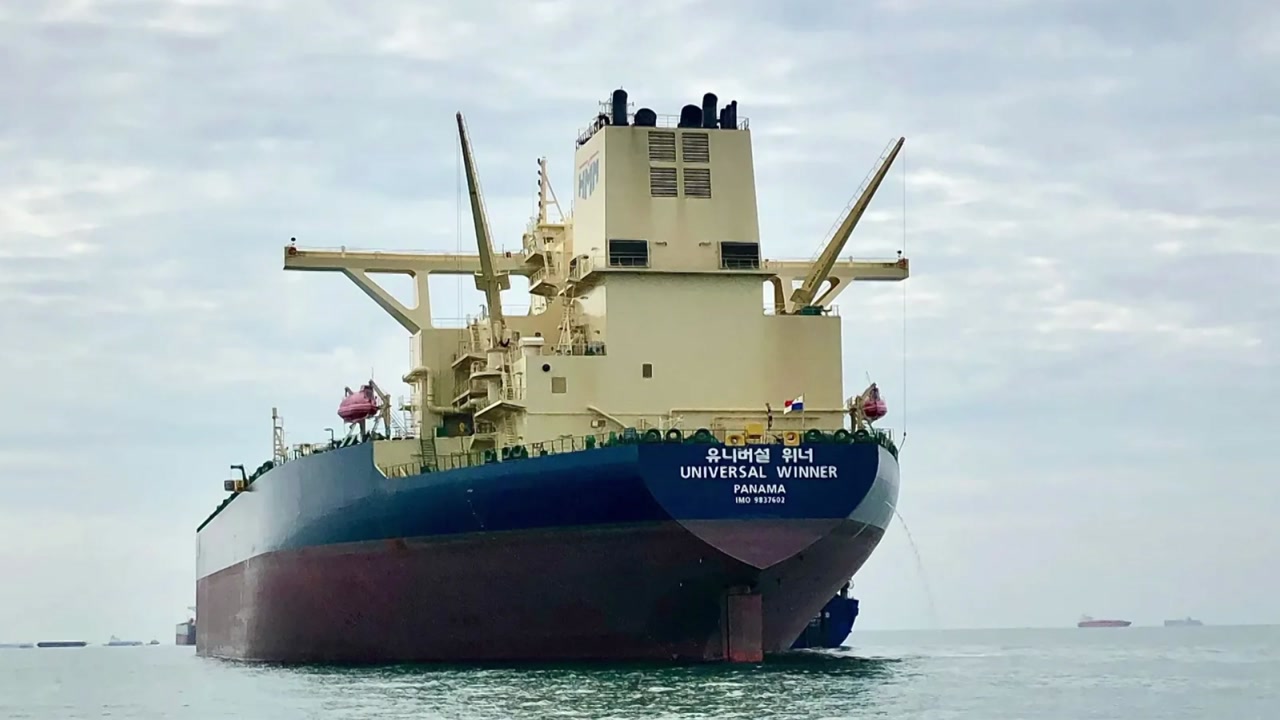
Following the outbreak of the Middle East war and the crisis in Iran at the end of February 2026, the Strait of Hormuz has been under a de facto blockade. While the recent news that a South Korean-flagged oil tanker passed through the strait for the first time is encouraging, massive uncertainty still dominates from the perspective of the global supply chain.
This report provides a detailed analysis of the current vessel gridlock within the strait, the shifting dynamics following the US-China summit, and the feasibility of realizing free navigation within 2026.
1. Current Status of Stranded International Vessels and Crews in the Strait of Hormuz
The scale of global merchant vessels and crews currently stranded in and around the Strait of Hormuz and the Persian Gulf is unprecedented in modern maritime history.
- Number of Stranded Vessels: The total number of merchant ships waiting or detained inside the strait and in nearby outer anchorages is estimated to be over 1,550. (Compiled by the US Joint Chiefs of Staff and maritime logistics analytics agencies)
- Number of Stranded Crews: The number of crew members currently stranded in this zone reaches approximately 22,500. (For South Korea, 26 flagged vessels and 186 crew members had been stranded, with one vessel recently succeeding in making the first transit.)
- Actual Cause of the Blockade: The Islamic Revolutionary Guard Corps (IRGC) continues to stage shows of military force, claiming control over the strait. Decisively, as of March 5, the renewal of War Risks P&I (Protection and Indemnity) insurance by maritime federations was refused, leading private shipping companies to voluntarily decline transit.
2. Shifting Dynamics After the US-China Summit
The US-China summit between US President Trump and Chinese President Xi Jinping, held in mid-May, serves as a new turning point and a complex variable in the Hormuz crisis.
The ‘Privileged’ Transit of Chinese Vessels and China’s Role as a Mediator
Just prior to the US-China summit, ultra-large crude carriers (VLCCs) such as the ‘Yuan Hua Hu’, owned by affiliates of China’s COSCO, safely passed through the strait under the tacit approval of Iran. As the largest importer of Iranian oil, China wields significant diplomatic leverage over Tehran, which it utilized to secure top-priority safety guarantees for its own vessels.
Dissonance Right After the Summit
Following the meeting, the White House announced that “both leaders agreed on maintaining the open status of the Strait of Hormuz.” However, immediately afterward, Fu Cong, China’s Ambassador to the UN, clearly expressed opposition to the ‘resolution condemning Iran’ pushed by the US and Gulf states, stating that “the timing and content are inappropriate.” China prefers resolving the issue through individual negotiations with Iran rather than Western-led military and diplomatic pressure.
The Trend of ‘Conditional Allowance’ for Transit
The safe passage of the South Korean oil tanker was also achieved through prior diplomatic consultations with Iran. This suggests that following the US-China summit, instead of an unconditional blockade, Iran is shifting to a ‘salami tactic’—selectively opening the gates only to vessels from countries that are not hostile to them or with whom diplomatic negotiations have been completed.
3. Outlook on the Feasibility of Realizing ‘Free Navigation’ Within 2026
The likelihood of resuming unconditional, ‘complete free navigation’ within the second half of 2026 is assessed as Low to Moderate in the short term. For a complete resolution, the following three core knots must be untied:
① Stagnation in Transitioning from ‘Selective Transit’ to ‘Universal Transit’
Current transits are the result of one-on-one bilateral negotiations. Iran is using its control over the strait as diplomatic leverage (a bargaining chip) against the West. Therefore, unless there are tangible concessions from the United States (such as sanctions relief or the cessation of military actions), Iran has no reason to unconditionally open the strait to all merchant vessels worldwide.
② The Issue of Resuming Protection and Indemnity (P&I) Insurance
The biggest obstacle is the cold climate in the private financial and insurance markets. Even if Iran provides verbal safety guarantees, it will be difficult for regular liners from major shipping companies (such as Maersk, MSC, etc.) to return unless global insurers reclassify the Strait of Hormuz as a ‘navigable zone’ and resume underwriting. The resumption of insurance must be preceded by a complete end to military tensions.
③ Limitations of Alternative Routes and Economic Pressure
Global economic damages are skyrocketing, evidenced by Qatar’s declaration of Force Majeure on LNG, surging European gas prices, and a food supply chain crisis among Gulf Cooperation Council (GCC) countries. While this will intensify mediation pressure from the international community, paradoxically, Iran is using this damage as a weapon to pressure the West, making it difficult to find a compromise.
💡 Summary and Conclusion
The keyword for the Strait of Hormuz in 2026 is ‘limited opening.’
A US-led military solution or complete free navigation through a UN Security Council resolution will face difficulties due to opposition from China and Russia. However, much like the first successful transit case of South Korea, ‘limited and conditional transit’ achieved through individual bilateral negotiations and indirect mediation via China is expected to gradually increase toward the second half of the year. The realization of flawless free navigation is projected to be possible only after an agreement is signed that completely halts military hostilities within the Middle East.
Leave a Reply