
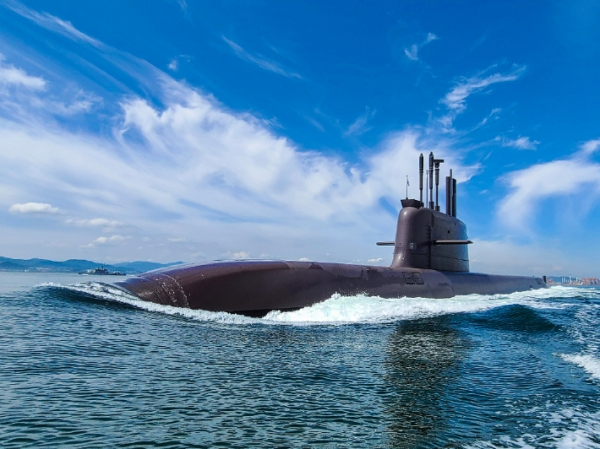
The final announcement for the Canadian Patrol Submarine Project (CPSP)—valued at up to KRW 60 trillion (exceeding KRW 100 trillion when factoring in the full lifecycle cost)—by the Canadian government (the Mark Carney administration) is imminent. As noted, this decision will extend far beyond mere alignment with NATO’s diplomatic schedules; it will be the result of meticulous calculations centered on Canada’s national interests, including geopolitical positioning, budget efficiency, and on-time delivery capabilities.
From an investor’s perspective, regardless of the short-term win-or-lose outcome against Germany’s TKMS, a multi-dimensional approach is required—one that focuses on the elevated global status and long-term structural growth that the South Korean defense industry (K-Defense) has secured on the global stage.
Canada Submarine Project Imminent: Long-term K-Defense Investment Strategy for Investors
1. Defending Against Short-term Volatility: Approaching as an ‘Option’ Rather Than an ‘All-in’
As Defense Minister David McGuinty indicated that a split order (dividing the contract between South Korea and Germany) is highly unlikely, this procurement has taken on the characteristics of a short-term momentum play—a clear win-or-lose scenario.
- Proof of Competency: The fact that South Korean defense firms, led by Hanwha Ocean, competed fiercely until the very end in a two-way shortlist against Germany’s TKMS—the world’s foremost authority in diesel-electric submarines—is a milestone that fully validates the technological and commercial value of South Korean submarines (KSS-III Batch-II) in the global market.
- Risk Management: While a failure to secure the contract may trigger a short-term stock price correction, this could conversely present long-term investors with an excellent opportunity to “buy the dip” on premium defense equities.
2. Concrete Strategies for K-Defense Companies (Long-term Growth Drivers)
Regardless of the procurement outcome, there are three core strategies that K-Defense must establish to lead the global market, which also serve as critical focal points for investors:
- Commercializing Unmatched Delivery Capabilities (Timeline Window): Hanwha Ocean leveraged its overwhelming construction speed as a core strength, proposing its first delivery by 2032 and a total of four submarines by 2035. In an era of global security crises where nations urgently require immediate defense assets, South Korea’s rapid delivery capability will serve as its most powerful weapon in future overseas projects (such as Poland’s Orka project, Australia, and the Philippines).
- Establishing Global MRO Hubs and Local Supply Chains: Given that sustainment accounted for up to 50% of Canada’s project evaluation criteria, the paradigm of defense exports has fundamentally shifted from a simple “one-time sale” to “30-to-40-year long-term lifecycle management.” K-Defense must sophisticatedly advance its localization strategies (Industrial and Technological Benefits, or ITB) during global exports, building on its supply chain partnership expertise with local firms (e.g., Canada’s Algoma Steel).
- Diversifying the Naval Defense Portfolio: South Korean defense must evolve into a total solution provider that encompasses the entire spectrum of maritime security, moving beyond submarines to include surface combatants and uncrewed maritime systems (manned-unmanned teaming systems).

3. Key Checkpoints from an Investor’s Perspective
- M&A and Integration into the Global Value Chain: Investors should closely monitor attempts to acquire local shipyards in countries like Australia and the United States, as well as entries into the North American naval MRO market. Breaking through the high entry barriers of the North American defense market is far more critical than a single procurement outcome.
- Diversification of Geopolitical Beneficiaries: Demand for maritime security is exploding simultaneously in the European-centric NATO market and the Asia-Pacific/Indo-Pacific regions. South Korea stands as the only viable alternative capable of delivering both cost-efficiency and cutting-edge technological reliability to meet both demands.