
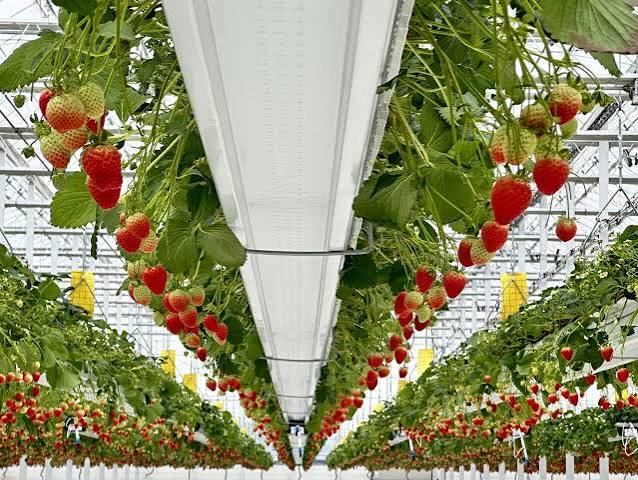
From High Costs to High ROI: The Rise of Affordable AI Smart Farms Driven by Climate Crisis
The imbalance in crop supply and global food security crises caused by the climate breakdown are paradoxically accelerating the mass adoption of technology-intensive agriculture (AgTech).
Shifting away from the high-cost, Dutch-style glasshouse model, this analysis examines the entry-level AI smart farm transition from the dual perspectives of investors and farmers—focusing on installation feasibility, AI-driven energy reduction mechanics, and the shifting global supply chain landscape.
1. CAPEX Breakdown and Installation Feasibility Analysis
Historically, vertical farms required massive initial capital expenditure (CAPEX)—reaching up to 20 million KRW (~$15,000 USD) per pyeong (approx. 3.3 sq meters)—restricting their adoption to conglomerates or government-backed projects.
Recently, modular technologies and the localization of materials (pioneered in South Korea) have slashed installation costs down to 3 to 4 million KRW (~$2,200–$3,000 USD) per pyeong, dramatically lowering the barrier to entry.
💡 Installation Cost per Pyeong & ROI Comparison by Facility Type
| Category | High-End Type (Dutch Glasshouse) | Entry-Level Vertical Farm (Korean Optimized) | Container / Modular Smart Farm |
| Installation Cost / Pyeong | ~8M – 12M KRW (~$6,000 – $9,000 USD) | ~3.5M – 4M KRW (~$2,600 – $3,000 USD) | ~2.5M – 3.5M KRW (~$1,850 – $2,600 USD) |
| Key Cost Drivers | Large glass structures, Dutch integrated controllers | Domestic multi-layer racks, high-efficiency LEDs, modular chassis | Upcycled container remodeling, Edge AI tuners |
| Target Operators | Large farming cooperatives, corporate capital | Family farms, small-to-mid investors, young/retired farmers | Peri-urban areas, extreme zones (e.g., Arctic, Middle East) |
| ROI Timeline | ~7 to 10+ years | ~3 to 4.5 years (based on 2-3x yield) | ~2 to 3 years (based on high-value crops) |
Core Driver of Cost Reduction: Replacing expensive imported controllers with domestic IoT sensors, adopting modular rack structures, and upgrading LED energy efficiency has reduced initial equipment costs by more than 70%. This provides small-scale capital operations with realistic economic feasibility to recover investments within 3 to 4 years.

2. OPEX Innovation via AI-Driven Operations
Operating expenses (OPEX)—specifically electricity and heating/cooling costs—have traditionally been the greatest weakness of smart farming. However, as AI energy-optimization controls (such as Samsung SmartThings Pro and other complex environmental control platforms) are integrated, the operational cost structure is undergoing a total transformation.
[ AI Multi-Environmental Control & Energy Saving Algorithm ] Weather Forecasts & Seasonal Time-of-Use (TOU) Rate Data Analysis │ ▼ [ AI Predictive Control Engine ] • Pre-blocks night heating/cooling demand (pre-heating/pre-cooling) • Automatically adjusts LED spectrum & illuminance (Dynamic Photosynthesis) │ ▼ [ Real-Time Result: 30–40% Energy Savings & High Yields ]

⚙️ 3 Core Functions of AI Automated Management Systems
- Time-of-Use (TOU) Rate Linked Control: During peak hours when power rates spike, the system utilizes pre-stored thermal energy and auxiliary energy storage systems (ESS). It shifts heavy LED illumination and water temperature regulation to nighttime off-peak hours when rates drop.
- Pinpoint Control by Growth Stage: AI continuously monitors temperature, humidity, $CO_2$ levels, and electrical conductivity (EC)/pH of drainage water. It matches exact crop demands during germination, vegetative, and harvest phases to eliminate resource waste.
- Anomaly Detection & Predictive Maintenance: The system tracks performance across 90+ indoor and outdoor units, detecting inefficient operation patterns or component stress before failures occur. This prevents crop loss caused by motor or pump downtime.

3. Shifting Global Food Supply Chains and Regional Strategies
As climate change disrupts conventional open-field agriculture, the global food supply chain is shifting toward “Local Production for Local Consumption.”
- Middle East (Saudi Arabia, UAE): To overcome extreme arid environments, Middle Eastern nations are deploying modular smart farm models (tailored for strawberries and leafy greens) at scale. Decreasing water consumption by over 90%, these projects serve as vital national security initiatives for food self-sufficiency.
- Central Asia (Kazakhstan, Uzbekistan): Countries in Central Asia are resolving severe winter cold snaps and aging agricultural facilities using modular pilot greenhouse tech. These farms function as strategic supply outposts for exporting fresh produce across the region.
- North America & Europe: As extreme heat and droughts destabilize traditional open-field farming zones like Spain and California, governments and markets are accelerating policies to secure vegetable supply chains through peri-urban indoor vertical farms.

Leave a Reply